Free trial questions mapped to this clinical topic.
49 questionsSelf paced70% target score
Question 1
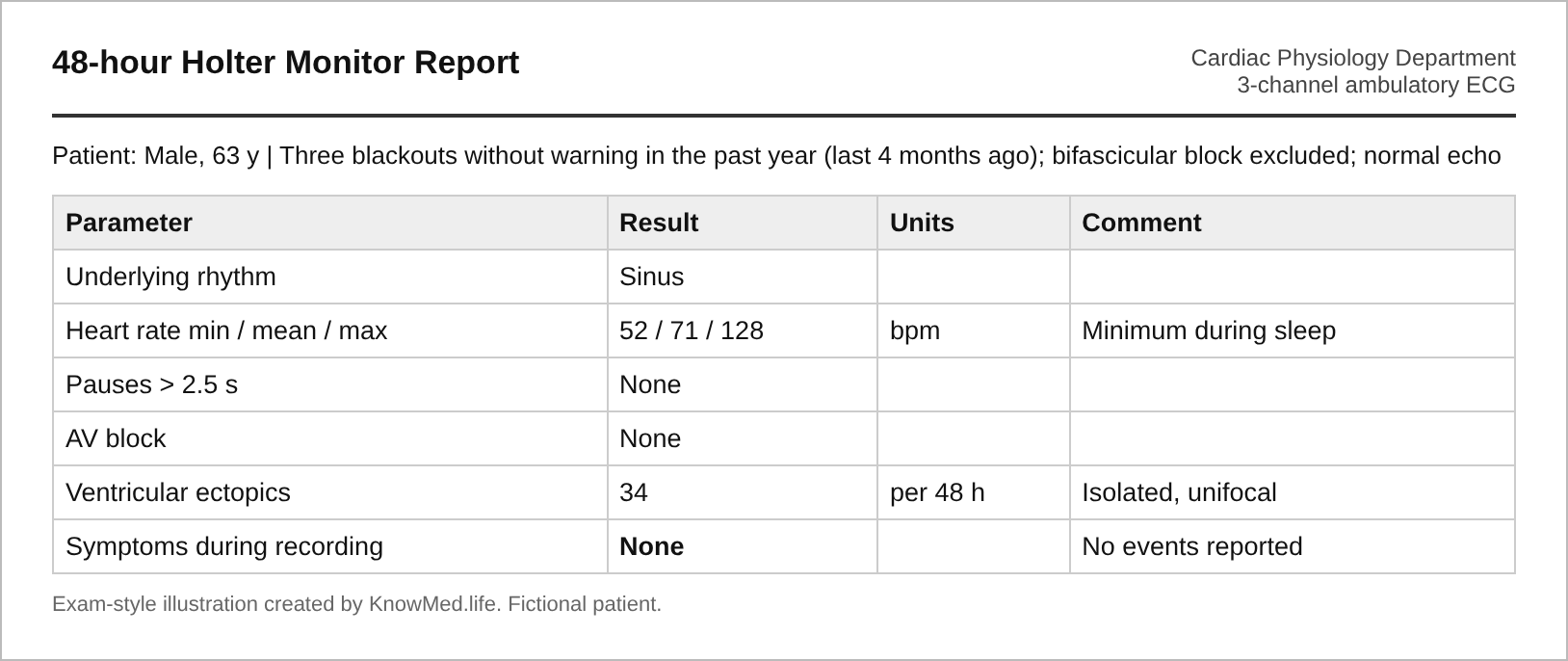
A 63-year-old man has had three blackouts without warning in the past year, the last 4 months ago. ECG and echocardiogram are normal. His 48-hour Holter report is shown. What is the most appropriate next investigation?
Rationale
The Holter shows sinus rhythm with no pauses, no AV block and only isolated ectopics, and no symptoms occurred during the recording. A normal Holter without symptoms does not exclude an arrhythmic cause; an arrhythmia must coincide with symptoms to be implicated. With episodes every few months, a 24-48 hour recording is very unlikely to capture an event. ESC and MSD recommend an implantable loop recorder for recurrent unexplained syncope when episodes are infrequent (less than about once a month), particularly when there is no prodrome. It records for up to about 3 years and can auto-trigger on pauses or tachycardia.
Why the other options are wrong:
A. Repeating a short Holter has a very low yield for events every few months.
B. CT head is only indicated with focal neurology or head injury.
D. EEG is for suspected seizures; there are no seizure features.
Where to revise: Study PDF: "Syncope: The Blackout Pathway" (KnowMed), page 10: Which test, when?; page 11: The syncope algorithm
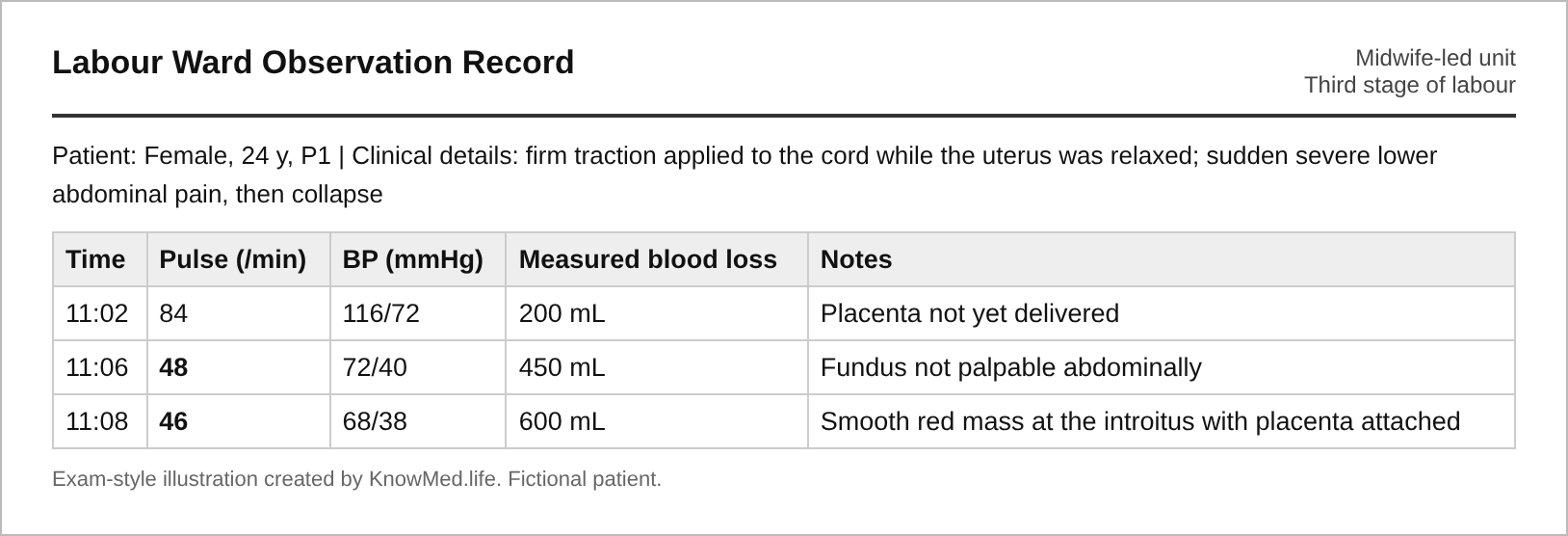
A 24-year-old woman collapses during the third stage of labour in a midwife-led unit. Her observation record is shown. What is the most appropriate immediate action?
Rationale
Severe pain and collapse after cord traction on a relaxed uterus, a fundus that cannot be felt abdominally and a smooth red mass at the introitus describe acute uterine inversion. The shock is out of proportion to the visible blood loss, and the bradycardia (46-48/min) reflects vagal stimulation from traction on the pelvic peritoneum. The immediate action is manual replacement (Johnson manoeuvre), pushing the fundus back up through the cervix, ideally before a constriction ring forms, while help is called and resuscitation started. Uterotonics are stopped until the uterus is replaced, and the placenta is not removed first because this increases bleeding. If manual replacement fails, hydrostatic (O'Sullivan) replacement or surgery (Huntington) follows; a uterotonic is given once the uterus is back. Atropine may help the bradycardia.
Why the other options are wrong:
A. Removing the placenta before replacement increases haemorrhage.
C. Uterotonics before replacement contract the cervical ring and trap the inverted fundus.
D. Laparotomy is used only after vaginal and hydrostatic methods fail.
Where to revise: Study PDF: "Postpartum Haemorrhage: The 4 Ts Emergency Pathway" (KnowMed), page 11: Tears, inversion, rupture and the retained placenta; page 15: Golden rules for MCQs
A 74-year-old man with COPD and a previous admission with hypercapnic respiratory failure needs a salbutamol nebuliser in the emergency department. His SpO2 is 90% on a 28% Venturi mask. How should the nebuliser be driven?
Rationale
Nebulisers need a gas flow of about 6-8 L/min, and if that gas is oxygen a patient at risk of hypercapnic failure can receive an uncontrolled high FiO2. The BTS oxygen guideline therefore recommends driving nebulisers with compressed air in these patients and giving oxygen separately via nasal cannula at 1-4 L/min to maintain the 88-92% target. If air is not available (for example in some ambulances), oxygen-driven nebulisers should be limited to 6 minutes. Nebulised salbutamol 2.5-5 mg, with ipratropium 0.5 mg, is the first-line bronchodilator treatment. Saturations should be monitored throughout. The trap is assuming oxygen is always safe as the driving gas.
Why the other options are wrong:
A. An oxygen-driven nebuliser delivers uncontrolled high-concentration oxygen and can worsen hypercapnia.
B. 15 L/min oxygen is even more dangerous and is not needed for nebulisation.
D. IV salbutamol has no advantage over nebulised therapy in AECOPD and causes more tachycardia and hypokalaemia.
Where to revise: Study PDF: "AECOPD: The Acute Exacerbation Pathway" (KnowMed), page 6: Controlled oxygen: target 88-92%
A 60-year-old man had an open right hemicolectomy 5 days ago and is recovering well on the ward. He asks whether he can fly home on a 3-hour flight tomorrow. What is the most appropriate advice?
Rationale
After major open abdominal surgery, the UK CAA and the MSD Manual advise avoiding air travel for about 10 days. Gas trapped in the bowel expands by about 30% at a cabin altitude of 8000 ft, which can strain the anastomosis and suture line, causing pain, bleeding, dehiscence or perforation. The length of the flight does not matter, because the expansion happens as soon as the cabin reaches altitude. After laparoscopic surgery or colonoscopy, residual gas is absorbed faster and flying is usually possible after 24 hours. Recent surgery also raises the risk of VTE, so mobilisation and thromboprophylaxis should be considered. The exam trap is believing a short flight is safe after major surgery.
Why the other options are wrong:
A. Gas expansion occurs on any flight, however short.
B. A binder does not prevent intraluminal gas expansion.
C. The 24-hour rule applies to laparoscopy, not open bowel surgery.
Where to revise: Study PDF: "Fitness to Fly: Clearance and Inflight Emergencies" (KnowMed), page 6: Pneumothorax, surgery and eye gas; page 2: The cabin is a mild altitude exposure
A 19-year-old football player collapses during an afternoon training session in Ras Al Khaimah. He is agitated and does not know where he is. A tympanic thermometer reads 38.4 C. What is the most appropriate next step?
Rationale
Tympanic, oral, axillary and temporal artery temperatures are unreliable in exercising patients and often underestimate core temperature by several degrees because of rapid breathing, sweating and ambient heat. Rectal (or oesophageal) temperature is the only accurate field measurement of core temperature in suspected exertional heatstroke. Agitation and disorientation after exertion in the heat must be treated as heatstroke until proven otherwise. If a rectal thermometer is not immediately available, cooling should start on clinical suspicion rather than waiting. Exercise-associated hyponatraemia is a differential for confusion after prolonged exercise, so sodium should be checked once in hospital.
Why the other options are wrong:
A. A low tympanic reading does not exclude heatstroke in a confused athlete.
C. A 30-minute delay prolongs hyperthermia, which determines outcome.
D. CT does not come before cooling; it is for patients whose consciousness does not improve after cooling.
Where to revise: Study PDF: "Heatstroke: Cool First, Transport Second" (KnowMed), page 5: Recognising heatstroke and the classic traps
A 58-year-old man attends the emergency department with a left anterior nosebleed for 30 minutes. He is anxious. BP 186/104 mmHg, pulse 96/min. He has no headache, chest pain, visual symptoms or neurological signs. A bleeding point is seen on the left anterior septum. What is the most appropriate next step?
Rationale
Raised blood pressure is common in patients presenting with epistaxis and is often driven by pain, anxiety and the bleed itself. MSD notes that hypertension may prolong a bleed but is unlikely to be the sole cause. With a visible anterior bleeding point, the priority is local control: topical anaesthetic and vasoconstrictor (e.g. lidocaine with phenylephrine) on pledgets, then silver nitrate cautery to the point. Once the bleed is controlled and he is calmer, the BP should be rechecked; persistent hypertension without end-organ damage is managed in primary care, not with acute IV agents. Rapid BP lowering in hypertensive urgency risks cerebral and myocardial hypoperfusion.
Why the other options are wrong:
A. IV antihypertensives are for hypertensive emergencies with end-organ damage, which he does not have.
C. Sublingual nifedipine causes unpredictable, precipitous falls in BP and is no longer recommended.
D. He has no neurological features; CT head would delay treatment of the bleed.
Where to revise: Study PDF: "Epistaxis: Pressure, Cautery, Pack, Escalate" (KnowMed), page 8: First aid, topical agents and cautery; page 11: Anticoagulants, bleeding disorders and hypertension
An 81-year-old man with mild dementia (MMSE 23/30) is on the ward with pneumonia, improving on IV antibiotics. He wants to go home today to his wife. On assessment he can explain that the infection might come back and he could die, compares this with his wish to be at home, and repeats the plan back. His daughter asks the team not to let him go "because he has dementia". What is the most appropriate response?
Rationale
Capacity is decision-specific and time-specific, and a diagnosis such as dementia does not by itself mean a person lacks capacity. This man understands the relevant information, retains it, weighs it against his wish to be at home and communicates a clear choice, so he has capacity for this decision. His daughter's concern should be acknowledged, and with his consent she can be involved in planning, but she cannot decide for him. Harm reduction includes an oral antibiotic course, a GP or home-care review in 48 hours, a written plan and advice to call 998 or return if he becomes breathless or confused. The capacity assessment and the discussion must be recorded in the notes.
Why the other options are wrong:
A. Dementia is a diagnosis, not a capacity verdict; the functional test decides.
B. A relative cannot sign for a competent adult.
C. Using security to restrict a competent patient breaches Article 9(2).
Where to revise: Study PDF: "DAMA: Discharge Against Medical Advice" (KnowMed), page 5: Assess decision-making capacity for this decision; page 13: Principles and the classic myths
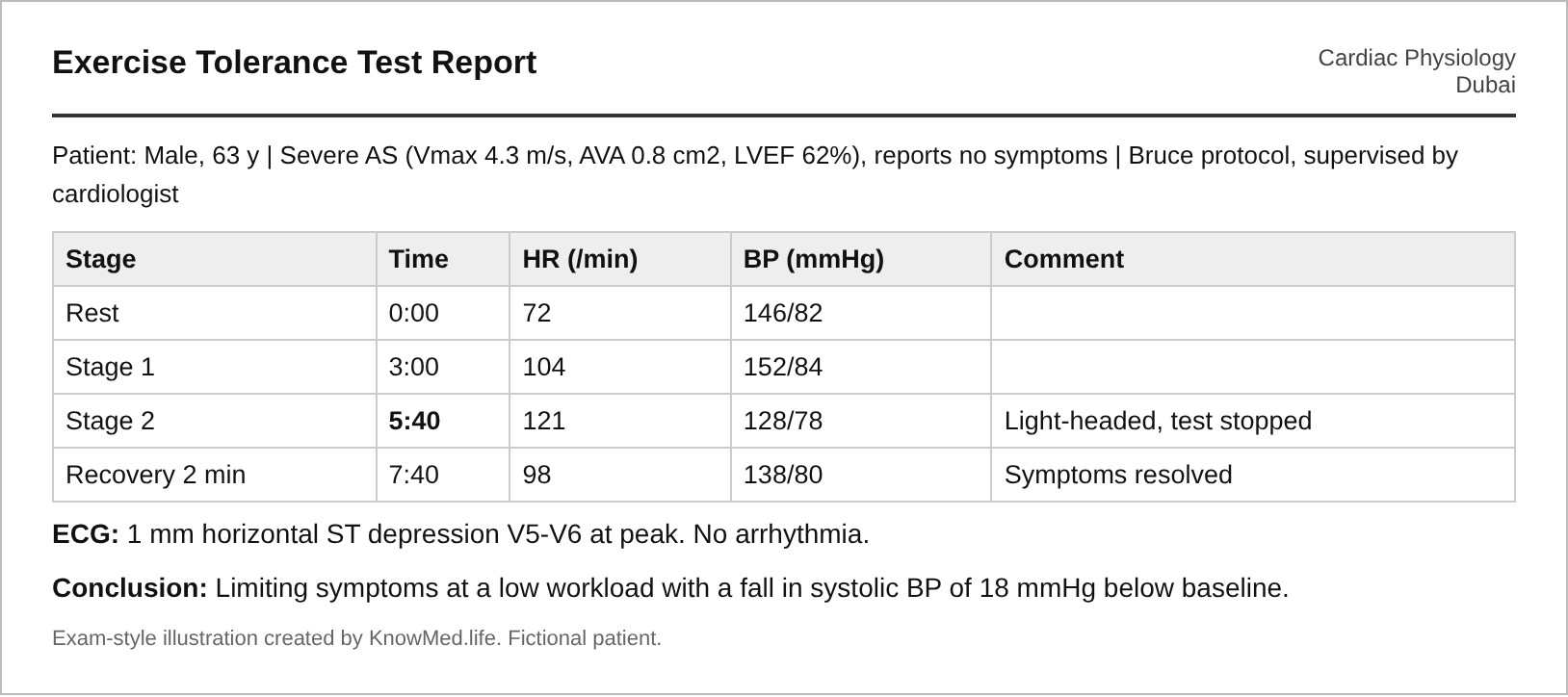
A 63-year-old man with severe AS says he has no symptoms. A supervised exercise test is performed. The report is shown. What is the correct interpretation?
Rationale
Exercise testing is recommended in physically active patients with apparently asymptomatic severe AS to unmask symptoms. Many older patients unknowingly limit their activity. This test shows limiting light-headedness at a low workload and a fall in systolic BP below baseline (from 146 to 128 mmHg), meaning cardiac output cannot rise across the fixed obstruction. Exercise-induced symptoms are a Class I indication for intervention; a fall in BP of 10 mmHg or more (ACC/AHA) or more than 20 mmHg (ESC) is also an indication. ST depression alone is less predictive because LVH causes it. Exercise testing must never be done in patients with known symptomatic severe AS.
Why the other options are wrong:
A. Exercise-limiting symptoms with a fall in BP make the test abnormal, not normal.
B. ST depression is common in LVH; the key findings are the symptoms and the BP fall.
D. Pushing a patient with severe AS beyond a hypotensive, symptomatic response risks syncope or VF.
Where to revise: Study PDF: "Aortic Valve Stenosis: The Ejection Murmur Pathway" (KnowMed), page 7: Work-up (exercise test); page 10: Severe AS management algorithm
A 66-year-old man had a coronary stent inserted 4 years ago and now takes only low-dose aspirin. He has a bleeding duodenal ulcer treated successfully with clips and is on a PPI. What should be done with his aspirin?
Rationale
Aspirin for secondary prevention of cardiovascular disease should be continued once haemostasis has been achieved (NICE CG141) or restarted within about 0-3 days of endoscopic treatment (MSD Manual). In the landmark trial by Sung and colleagues, patients who stopped aspirin after ulcer bleeding had higher cardiovascular events and death, while the small increase in rebleeding was manageable with a PPI. Long-term PPI co-therapy and H. pylori eradication reduce future bleeding. Aspirin taken only for primary prevention is different and can usually be stopped. Other NSAIDs, including COX-2 inhibitors, should be stopped.
Why the other options are wrong:
A. Permanent cessation of secondary-prevention aspirin raises the risk of MI, stroke and death.
B. Clopidogrel alone carries a higher rebleeding risk than aspirin plus PPI.
C. A 6-week gap leaves him unprotected against stent thrombosis and other cardiovascular events.
Where to revise: Study PDF: "Upper GI Bleeding: Resuscitate, Score, Scope" (KnowMed), page 13: Aspirin, clopidogrel and anticoagulants - Library: "Coronary Artery Disease: Stable Angina & CCS" (KnowMed)
A 30-year-old woman at 16 weeks' gestation is diagnosed with drug-susceptible pulmonary TB. Which drug must be avoided?
Rationale
Streptomycin, an aminoglycoside, crosses the placenta and causes congenital eighth-nerve damage (deafness), so it is contraindicated in pregnancy. Isoniazid, rifampicin and ethambutol are considered safe, and pyrazinamide is widely used (recommended by WHO, with informed decision- making advised by CDC). Untreated TB is far more dangerous to mother and fetus than the drugs, so treatment should not be delayed. Pyridoxine is given with isoniazid, and breastfeeding is safe during treatment. The 4-month rifapentine-moxifloxacin regimen is not recommended in pregnancy.
Why the other options are wrong:
A. Isoniazid is safe in pregnancy and is given with pyridoxine.
C. Rifampicin is safe; newborns may be given vitamin K as per usual practice.
D. Ethambutol is safe in pregnancy.
Where to revise: Study PDF: "Tuberculosis: Suspect, Confirm, Cure" (KnowMed), page 14: HIV, pregnancy, children and kidney disease
A 5-year-old girl with functional constipation has been on maintenance macrogol 1 sachet daily for 6 weeks. For the past 3 weeks she has passed a soft stool every day without pain or soiling. Her mother wants to stop the laxative today because she is "cured". What is the best advice?
Rationale
NICE advises continuing maintenance laxatives for several weeks after a regular bowel habit has been established, and then reducing the dose gradually over a period of months rather than stopping abruptly. The stretched rectum takes time to recover its normal size and sensation, and early withdrawal is a common cause of relapse into the withholding cycle. Children who are toilet training should remain on laxatives until training is well established. Scheduled toileting after meals, a reward system, fluids and fibre continue throughout. Parents can be reassured that macrogol is not addictive and that long-term use at a maintenance dose is safe.
Why the other options are wrong:
A. Stopping abruptly after a short period of normal stools often leads to relapse.
B. Stimulants are add-on or alternative agents, not a replacement for successful macrogol maintenance.
D. Waiting for relapse and treating it rectally is distressing and unnecessary.
Where to revise: Study PDF: "Constipation in Children and Adolescents: The Withholding Cycle" (KnowMed), page 10: Behaviour, diet and duration; page 8: The NICE management pathway
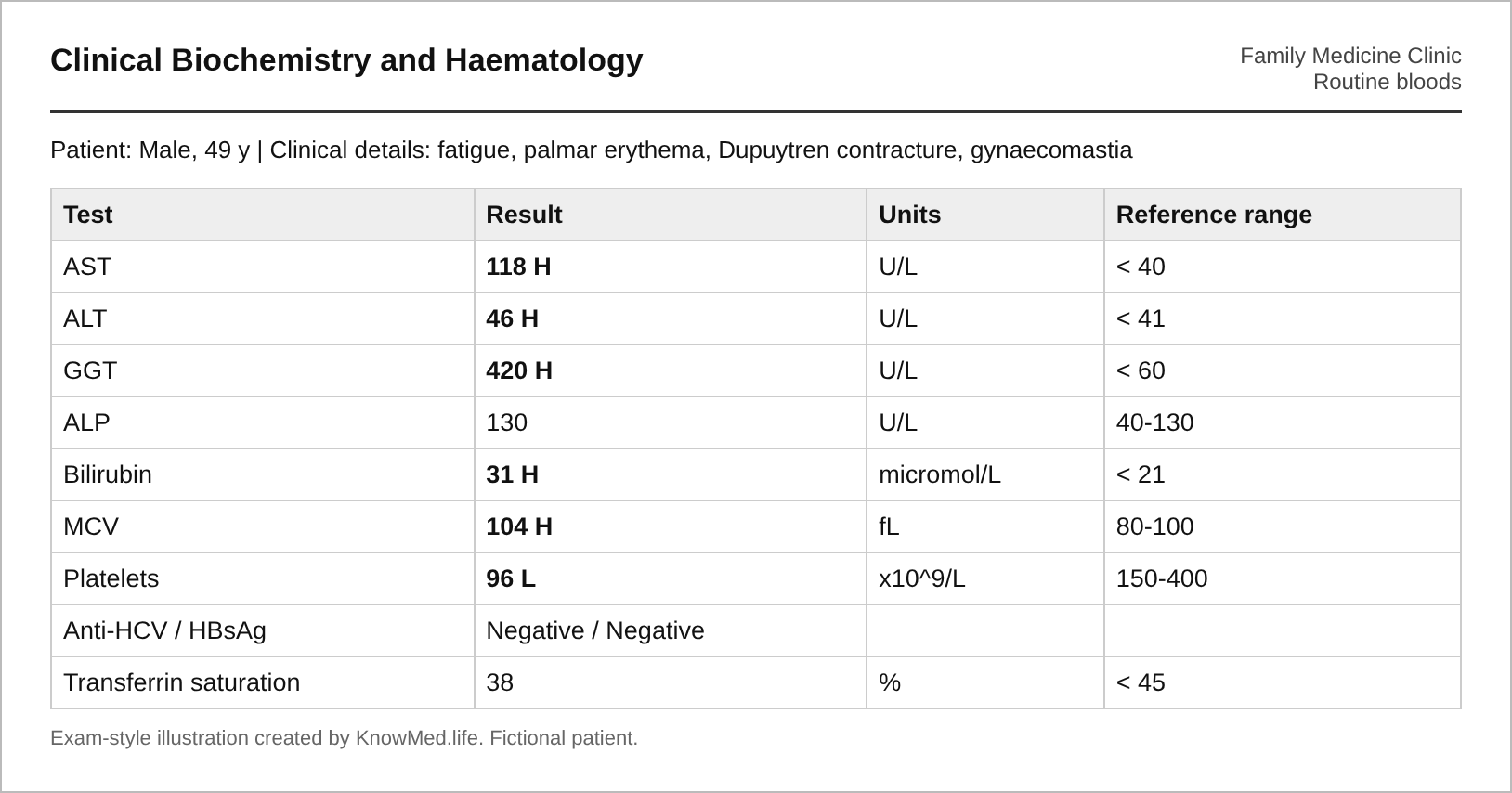
A 49-year-old man attends a family medicine clinic with fatigue. He has palmar erythema, Dupuytren contracture and gynaecomastia. His blood results are shown. What is the most likely cause of his liver disease?
Rationale
An AST:ALT ratio above 2 (118:46), a very high GGT and macrocytosis (MCV 104 fL) form the classic laboratory pattern of alcohol-related liver disease. Alcohol damages mitochondria (AST is partly mitochondrial) and causes pyridoxine deficiency, which lowers ALT more than AST. Dupuytren contracture is also associated with alcohol. The low platelet count (96 x10^9/L) suggests portal hypertension and hypersplenism, so he probably already has cirrhosis and needs elastography or ultrasound, HCC surveillance if confirmed, and variceal risk assessment. Viral serology is negative and transferrin saturation is normal, which makes hepatitis C and haemochromatosis unlikely. Management centres on complete abstinence with support (brief intervention, relapse-prevention drugs), nutrition and thiamine. Serum phosphatidylethanol (PEth) can confirm recent drinking.
Why the other options are wrong:
A. Wilson disease presents under about 40 years with neuropsychiatric signs, Kayser-Fleischer rings and low caeruloplasmin.
B. PBC gives a cholestatic picture with a high ALP and positive AMA, typically in middle-aged women; ALP is normal here.
C. Anti-HCV is negative, which excludes chronic hepatitis C in an immunocompetent adult.
Where to revise: Study PDF: "Cirrhosis: From Fibrosis to Decompensation" (KnowMed), page 5: Blood tests, imaging and non-invasive fibrosis tests - Same PDF, page 6: Aetiology work-up: one test per cause
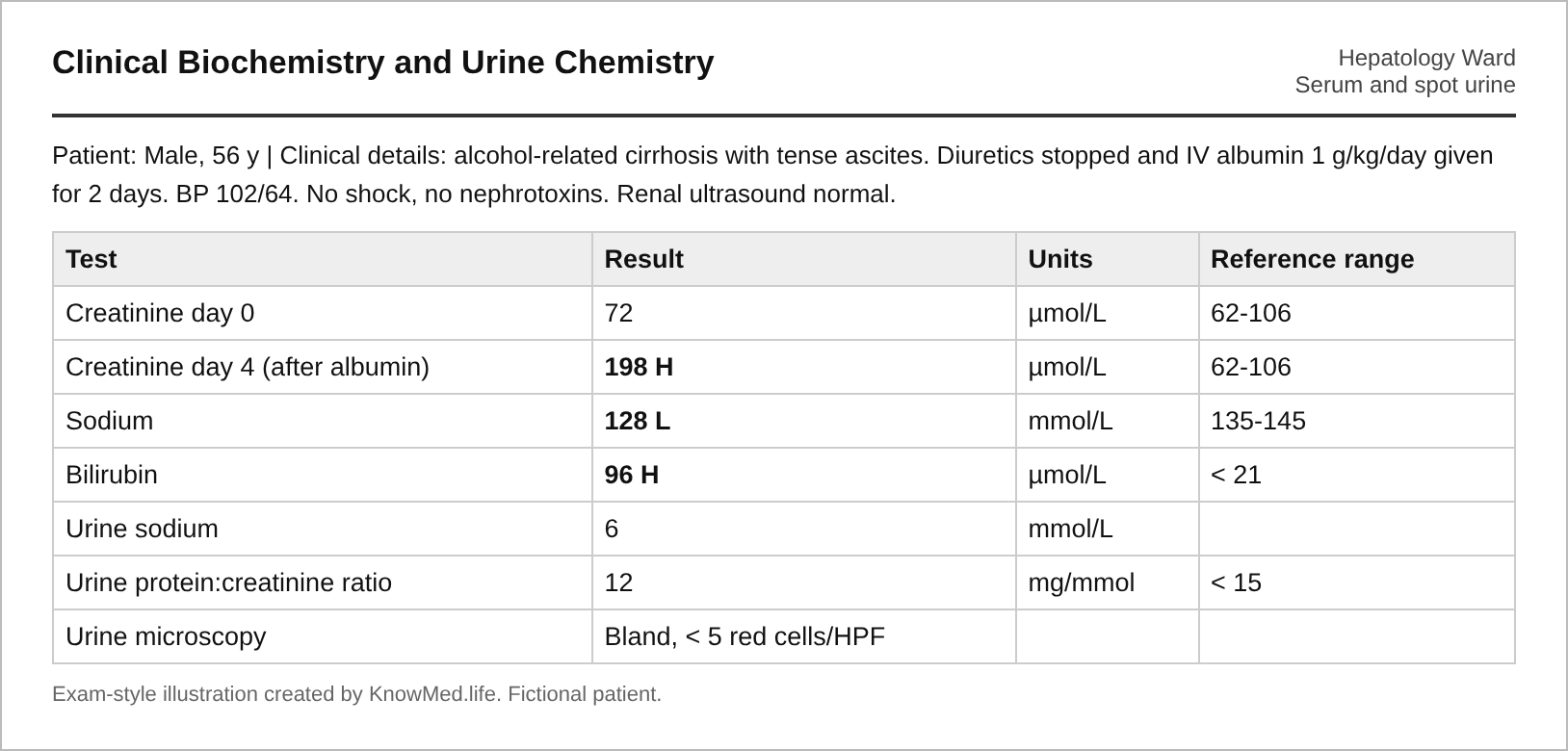
A 56-year-old man with alcohol-related cirrhosis and tense ascites develops AKI. His diuretics were stopped and he received IV albumin 1 g/kg/day for 2 days. He is not shocked and has had no nephrotoxins. His results are shown. What is the most appropriate treatment?
Rationale
AKI in cirrhosis with ascites that does not improve after 2 days of diuretic withdrawal and albumin (1 g/kg), with no shock, no nephrotoxins, a normal ultrasound, very low urine sodium, no significant proteinuria and a bland sediment, meets the criteria for hepatorenal syndrome-AKI. It is a functional, prerenal-type failure caused by intense renal vasoconstriction from splanchnic vasodilation. First-line treatment is a vasoconstrictor, terlipressin, given with albumin; noradrenaline is an alternative in intensive care. Terlipressin can cause ischaemia and respiratory failure, so monitor oxygenation and fluid balance. Liver transplantation is the definitive treatment; look for precipitants such as spontaneous bacterial peritonitis or GI bleeding.
Why the other options are wrong:
A. Large-volume paracentesis without albumin can worsen circulatory dysfunction and renal failure.
B. Diuretics worsen hepatorenal physiology and must be stopped.
C. Spironolactone also reduces renal perfusion and raises potassium; diuretics should remain stopped.
Where to revise: Study PDF: "Acute Kidney Injury: Stage, Find the Cause, Protect" (KnowMed), page 4: hepatorenal syndrome; page 13: named AKI syndromes (hepatorenal)
A 33-year-old woman on medium-dose budesonide-formoterol MART for 6 months complains of a sore mouth and a hoarse voice. On examination there are white plaques on the palate that scrape off. What is the most appropriate advice to prevent recurrence after treating the infection?
Rationale
She has oral candidiasis and dysphonia, the commonest local side effects of inhaled corticosteroids, caused by drug depositing in the oropharynx and on the vocal cords. After treating the thrush (for example with nystatin suspension or miconazole gel), recurrence is prevented by rinsing the mouth with water and spitting after each dose, checking inhaler technique, and using a spacer with a pressurised metered-dose inhaler to reduce oropharyngeal deposition. The ICS should be continued because it is essential for control and for preventing attacks and deaths. If problems persist, the lowest effective ICS dose is used. Systemic effects (adrenal suppression, osteoporosis, cataract, glaucoma) are seen mainly with high doses. The trap is stopping the ICS.
Why the other options are wrong:
A. Stopping ICS would leave airway inflammation untreated and increase the risk of severe attacks.
B. Oral steroids have far more systemic side effects than inhaled ones.
D. Changing the time of dosing does not reduce oropharyngeal deposition and would disrupt MART.
Where to revise: Study PDF: "Asthma: The GP Control Pathway" (KnowMed), page 10: ICS dose bands and ICS side effects
The UAE introduces an excise tax on sugar-sweetened drinks and a national policy requiring daily physical education in all schools, aiming to stop childhood obesity from developing in the first place. Which level of prevention do these measures represent?
Rationale
Primordial prevention acts on the social, economic and environmental conditions that allow risk factors to appear, so that the risk factor itself (here obesity) never develops in the population. A sugar tax and compulsory school physical education are population-wide policies aimed at children who do not yet have the risk factor. Primary prevention, by contrast, targets people who already carry a risk factor to stop disease onset (for example weight loss in prediabetes or a statin for high cardiovascular risk). These measures follow Rose's population strategy: shifting the whole distribution prevents more disease than treating only high-risk individuals (the prevention paradox). The exam trap is to call every population policy "primary"; ask whether the risk factor already exists.
Why the other options are wrong:
B. Primary prevention targets people at risk to prevent the disease itself, for example vaccination or treating hypertension.
C. Secondary prevention is early detection of silent disease, such as screening.
D. Tertiary prevention limits complications of established disease, such as rehabilitation.
Where to revise: Study PDF: "Preventive Medicine: Prevent, Screen, Protect" (KnowMed), page 2: The five levels of prevention; page 15: Population-level prevention
A 66-year-old man had a drug-eluting stent 14 months ago and now takes aspirin and ticagrelor (extended therapy). He needs an elective spinal decompression with very high bleeding risk. Cardiology agrees antiplatelets can be interrupted. How many days before surgery should ticagrelor be stopped (ESC 2022)?
Rationale
The ESC 2022 guideline recommends stopping ticagrelor 3-5 days before surgery, clopidogrel 5 days and prasugrel 7 days when interruption is required. For intracranial and spinal surgery, where even minor bleeding is catastrophic, aspirin is also stopped (about 7 days before), which is acceptable here because he is beyond 12 months from stent placement. Antiplatelets should be restarted within 48 hours once surgical haemostasis allows. Decisions about interrupting antiplatelets in stented patients should always involve the cardiologist. The trap is to confuse the stop times for the three P2Y12 inhibitors.
Why the other options are wrong:
A. One day is far too short; ticagrelor effect lasts several days.
B. Two days is still too short for high-bleeding-risk surgery.
D. Ten days is unnecessarily long and prolongs the period of ischaemic risk.
Where to revise: Study PDF: "Preoperative Management: Assess, Optimise, Proceed" (KnowMed), page 9: Antiplatelets and other cardiac drugs
In a surgical trial, the research nurse who enrols patients uses a central telephone service to obtain each patient's group allocation only after the patient has consented and been enrolled. What is the main purpose of this step?
Rationale
Allocation concealment means that the person enrolling participants cannot know or predict the next assignment until the patient is irreversibly entered into the trial. Without it, recruiters can consciously or unconsciously steer sicker or healthier patients into one arm, destroying the benefits of randomisation; trials with inadequate concealment exaggerate treatment effects. Central telephone or web randomisation and sequentially numbered, opaque, sealed envelopes are standard methods. Allocation concealment happens before assignment and is always possible, whereas blinding happens after assignment and may be impossible, for example when comparing surgery with medication. CONSORT 2025 requires trials to report both.
Why the other options are wrong:
B. Blinding hides group allocation after assignment from participants, clinicians or assessors; this step happens before assignment.
C. ITT is an analysis strategy, not an enrolment procedure.
D. Power depends on sample size, effect size and variability, not on how allocation is concealed.
Where to revise: Study PDF: "Interpreting Medical Evidence: From Abstract to Answer" (KnowMed), page 6: Is the trial valid?; page 5: Why results can be wrong
A first-time mother attends a well-baby clinic in Abu Dhabi with her 3-week-old son. She is exhausted and says he cries for hours every evening. Which advice is most effective in preventing abusive head trauma?
Rationale
Inconsolable infant crying is the most common trigger for shaking, and abusive head trauma peaks in the first months of life, mirroring the normal crying curve, which rises from about 2 weeks to a peak at about 6-8 weeks and then declines. Prevention programmes teach parents that this crying is normal, give soothing strategies, and give explicit permission to put the baby down safely in the cot and walk away for a few minutes when frustrated, while stressing that a baby must never be shaken. Every well-child visit is an opportunity to screen for maternal depression, domestic violence and lack of support, and to involve family members and community services. A first-time, exhausted, isolated parent with a crying infant has several risk factors that should prompt extra support.
Why the other options are wrong:
B. Gripe water does not address the underlying risk and has no proven benefit.
C. Room-sharing is recommended for safe sleep in the first months; sleeping in a separate room does not prevent shaking.
D. Changing formula without features of cow's milk allergy is not indicated and does not reduce abuse risk.
Where to revise: Study PDF: "Child Maltreatment: Recognise, Protect, Report" (KnowMed), page 14: Prevention and long-term effects; page 3: Risk factors and protective factors
A 45-year-old finance manager is referred by his employer's occupational health service. He insists that every report follows his own detailed rules, redoes his team's work, cannot delegate and rarely takes leave. He says his standards are correct and that his colleagues are careless. He denies intrusive thoughts or rituals. What is the most likely diagnosis?
Rationale
He shows a pervasive pattern of perfectionism, preoccupation with rules and detail, inability to delegate and devotion to work at the expense of leisure, which are DSM-5-TR features of obsessive- compulsive personality disorder. Crucially, his traits are ego-syntonic: he believes his standards are right and the problem lies with others, and he has no intrusive obsessions or anxiety-reducing compulsions. OCPD is managed mainly with psychotherapy; SSRIs and ERP are not first-line as they are for OCD. OCPD can coexist with OCD in about a quarter to a third of OCD patients, so both should be asked about. The trap is choosing OCD because of the word 'obsessive' in the name.
Why the other options are wrong:
A. OCD requires unwanted obsessions and/or compulsions, which he denies, and OCD symptoms are ego-dystonic.
B. Autism involves social communication deficits and restricted interests from early childhood, not described here.
C. GAD is excessive worry with anxiety symptoms, not a rigid, rule-bound personality style that he values.
Where to revise: Study PDF: "Obsessive-Compulsive Disorder: Recognise, Expose, Treat" (KnowMed), page 6: OCD vs OCPD vs psychosis vs anxiety; page 15: Golden rules for MCQs
An 8-month-old girl with acute watery diarrhoea is being managed at home with ORS. Following WHO guidance, which zinc regimen should be prescribed?
Rationale
WHO and UNICEF recommend zinc for all children with acute diarrhoea, alongside low- osmolarity ORS: 10 mg daily for infants under 6 months and 20 mg daily for children 6 months and older, for 10 to 14 days. Zinc supports mucosal repair and immune function, shortens the episode, reduces stool volume and lowers the risk of diarrhoea in the following 2 to 3 months. The benefit is greatest where zinc deficiency is common. ESPGHAN notes less evidence of benefit in well-nourished European children, which explains differing local practice. At 8 months she needs the 20 mg dose. The trap is to stop zinc when the diarrhoea settles rather than completing the course.
Why the other options are wrong:
A. 10 mg is the dose for infants under 6 months, and 3 days is too short.
C. 40 mg exceeds the recommended dose.
D. Zinc is safe and recommended in infants, at 10 mg under 6 months.
Where to revise: Study PDF: "Bacterial Gastroenteritis in Children: The Dehydration and Dysentery Pathway" (KnowMed), page 10: Zinc, antiemetics and what to avoid
Four women attend booking at a unit that offers selective (risk-based) GDM testing according to NICE NG3. Which woman should be offered a 75 g OGTT at 24-28 weeks?
Rationale
NICE NG3 risk factors are BMI above 30 kg/m2, a previous macrosomic baby weighing 4.5 kg or more, previous GDM, a first-degree relative with diabetes, and a minority ethnic family origin with a high prevalence of diabetes (including South Asian, Black Caribbean and Middle Eastern). This woman has two risk factors: a BMI over 30 and Middle Eastern origin. Women with risk factors should have a 75 g OGTT at 24-28 weeks. Given the very high incidence of GDM in Emirati women (about 21% in the Mutaba'ah cohort), many UAE units test all pregnant women. Glycosuria warrants testing only if 2+ once or 1+ on two or more occasions.
Why the other options are wrong:
A. An aunt is a second-degree relative and a BMI of 26 is below the threshold.
B. A previous baby must weigh 4.5 kg or more to count as a risk factor.
D. A single trace of glycosuria is common in pregnancy and does not meet the NICE threshold for testing.
Where to revise: Study PDF: "Gestational Diabetes Mellitus: Screen, Control, Deliver Safely" (KnowMed), page 3: Who needs testing: risk factors
An echocardiographer is assessing a moderate effusion in a breathless patient. Which echocardiographic sign is the earliest and most sensitive indicator of rising pericardial pressure?
Rationale
The right atrium is the thinnest-walled, lowest-pressure chamber, so it is the first to be compressed as pericardial pressure rises. RA collapse in late diastole to early systole is therefore the earliest and most sensitive echo sign; collapse lasting more than one-third of the cardiac cycle increases specificity. RV diastolic collapse is less sensitive but more specific, and a plethoric IVC (under 50% inspiratory collapse) is highly sensitive. Exaggerated respiratory variation in mitral and tricuspid inflow reflects ventricular interdependence. Remember that tamponade is a clinical diagnosis: echo signs support, but do not on their own mandate, drainage.
Why the other options are wrong:
B. LV hypertrophy reflects pressure overload, not pericardial compression.
C. Left atrial dilatation reflects mitral disease or LV diastolic dysfunction.
D. Mitral valve prolapse is unrelated to pericardial pressure.
Where to revise: Study PDF: "Pericardial Effusion and Cardiac Tamponade: The Obstructive Shock Pathway" (KnowMed), page 7: Echocardiography: the key test
A 20-year-old university student in Dubai has a moderate depressive episode. After discussion he agrees to start sertraline 50 mg daily alongside psychological therapy. He has no suicidal thoughts at present. What is the most appropriate follow-up plan?
Rationale
The FDA boxed warning on all antidepressants describes a small increase in suicidal thoughts and behaviours in children, adolescents and young adults under 25, especially in the first weeks of treatment and after dose changes. For this reason young adults and anyone at increased risk should be reviewed within about 1 week of starting, and patients and families should be told to report agitation, akathisia, insomnia or new suicidal thoughts. The risk of a suicide attempt is often highest just before treatment begins and falls afterwards, so the warning is a reason to monitor closely, not to withhold treatment. An SSRI is preferred to a tricyclic because it is far safer in overdose. Mood improvement usually takes 2-4 weeks, so the 4-week review assesses response but is too late as the first contact. The exam trap is the 4-week review that is standard for older adults.
Why the other options are wrong:
B. A 4-week first review misses the early period of highest concern in a young adult.
C. A 3-month review is unsafe and also misses dose optimisation.
D. Close early review is required in under-25s regardless of how mood appears.
Where to revise: Study PDF: "Suicide: Ask, Assess, Keep Safe" (KnowMed), page 12: Drugs that lower or need care with suicide risk; page 15: Golden rules for MCQs
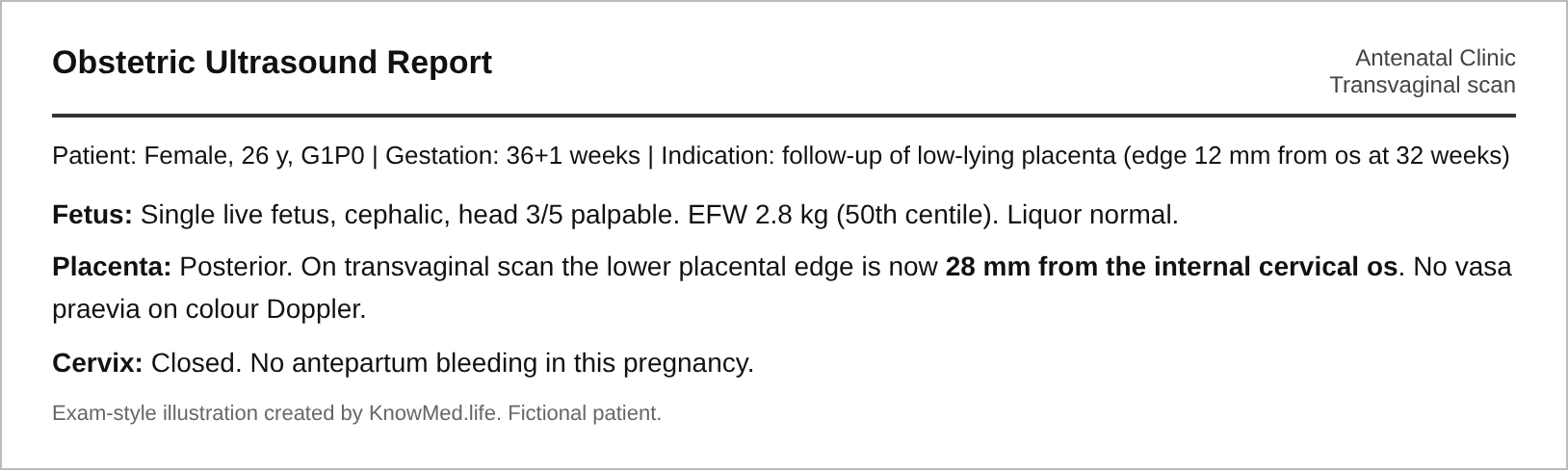
A 26-year-old primigravida had a low-lying posterior placenta, edge 12 mm from the os, at 32 weeks. She has had no bleeding. Her 36-week scan report is shown. What is the most appropriate plan for birth?
Rationale
The 36-week transvaginal scan shows the placental edge has migrated to 28 mm from the internal os, with no vasa praevia, a cephalic fetus and no history of bleeding. RCOG and MSD advise that when the placental edge is more than 20 mm from the os, a trial of vaginal birth is reasonable with a high chance of success, whereas an edge less than 20 mm usually leads to caesarean (with individual discussion when it is 0-20 mm). Placental migration happens because the lower uterine segment stretches and develops in the third trimester, carrying the placental edge upward. She should still give birth in a consultant-led unit, with intravenous access in labour and readiness for postpartum haemorrhage, since the lower segment contracts less well. The trap is to plan a caesarean based on an earlier scan rather than the latest one.
Why the other options are wrong:
A. Caesarean is not needed when the edge is more than 20 mm from the os.
B. Late preterm delivery at 34 weeks is for praevia with bleeding or other risk factors, not for a resolved low-lying placenta.
C. Admission is not needed for an asymptomatic woman with a placenta now clear of the os.
Where to revise: Study PDF: "Antepartum Haemorrhage: Previa, Abruption and Beyond" (KnowMed), page 12: When and how to deliver; page 5: Scan pathway
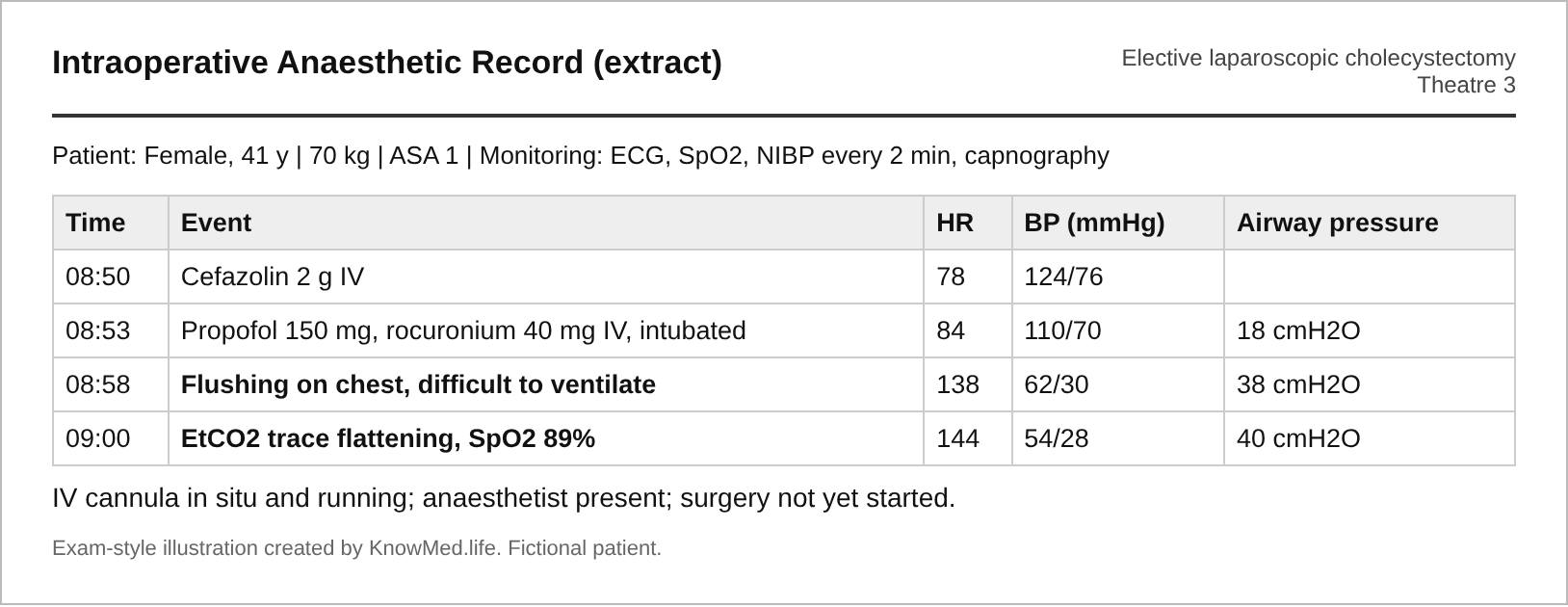
A 41-year-old woman is undergoing elective laparoscopic cholecystectomy. Her anaesthetic record is shown. The anaesthetist has called for help and stopped all drugs. Which adrenaline regimen is most appropriate in this setting?
Rationale
Within minutes of cefazolin and rocuronium she developed flushing, high airway pressures (bronchospasm), severe hypotension, tachycardia and falling SpO2 and EtCO2: grade 3-4 perioperative anaphylaxis. Neuromuscular blocking agents and antibiotics (cefazolin, teicoplanin) are the commonest perioperative triggers, along with chlorhexidine, patent blue and latex. Because she is in theatre with IV access, full monitoring and an anaesthetist present, titrated IV adrenaline in 50 microgram boluses (adult) is appropriate and acts faster than IM, followed by an infusion if repeated doses are needed. This is the only setting where IV bolus adrenaline is first-line; outside critical care, IM adrenaline is safer. Afterwards, tryptase samples and referral to an anaesthetic allergy clinic are essential.
Why the other options are wrong:
A. Withholding adrenaline in anaphylactic shock is dangerous; antihistamines and steroids are not first- line.
B. 1 mg IV boluses are for cardiac arrest; she still has a pulse and output.
C. 0.15 mg is the dose for a child aged 6 months-6 years and is far too little for an adult in shock.
Where to revise: Study PDF: "Anaphylaxis: Recognise, Adrenaline, Repeat" (KnowMed), page 13: Children, pregnancy, older adults and the operating theatre; page 8: IM adrenaline doses you must know by heart
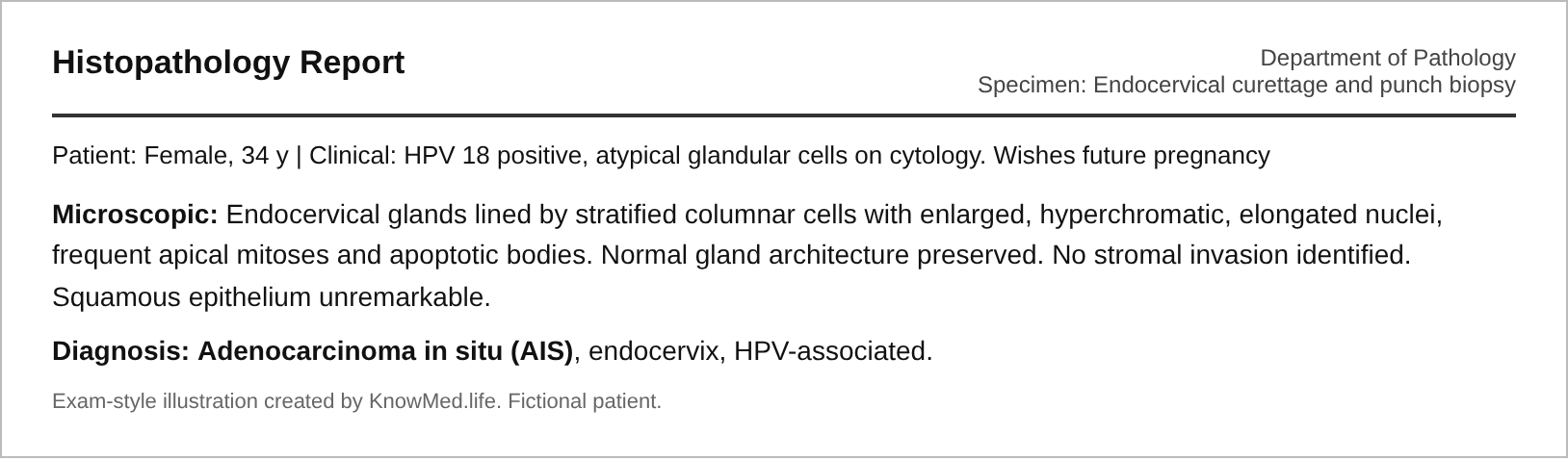
A 34-year-old woman who wishes to have children is seen in the colposcopy clinic. Her histology report is shown. What is the most appropriate next step?
Rationale
The report shows adenocarcinoma in situ (AIS) of the endocervix, the glandular precursor of adenocarcinoma, typically linked to HPV 18. AIS can be multifocal and skip lesions extend up the canal, so an excisional procedure that gives an intact specimen with clear margins is needed, and invasive adenocarcinoma must be excluded. A cold-knife cone (or a single-piece excision) is preferred so that margins are not obscured by thermal artefact. In a woman wishing fertility, conservative excision with negative margins and close follow-up is acceptable; hysterectomy is recommended once childbearing is complete. Ablation is contraindicated for glandular lesions.
Why the other options are wrong:
B. Ablative treatment such as cryotherapy is contraindicated for glandular lesions because it gives no specimen and may miss disease in the canal.
C. Surveillance alone is unsafe for AIS, which carries a risk of occult invasive adenocarcinoma.
D. Chemoradiation is for locally advanced invasive cancer, not in situ disease.
Where to revise: Study PDF: "Cervical Cancer: Screen, Stage, Treat" (KnowMed), page 9: See it, biopsy it, excise it; page 3: Who gets it, and what type
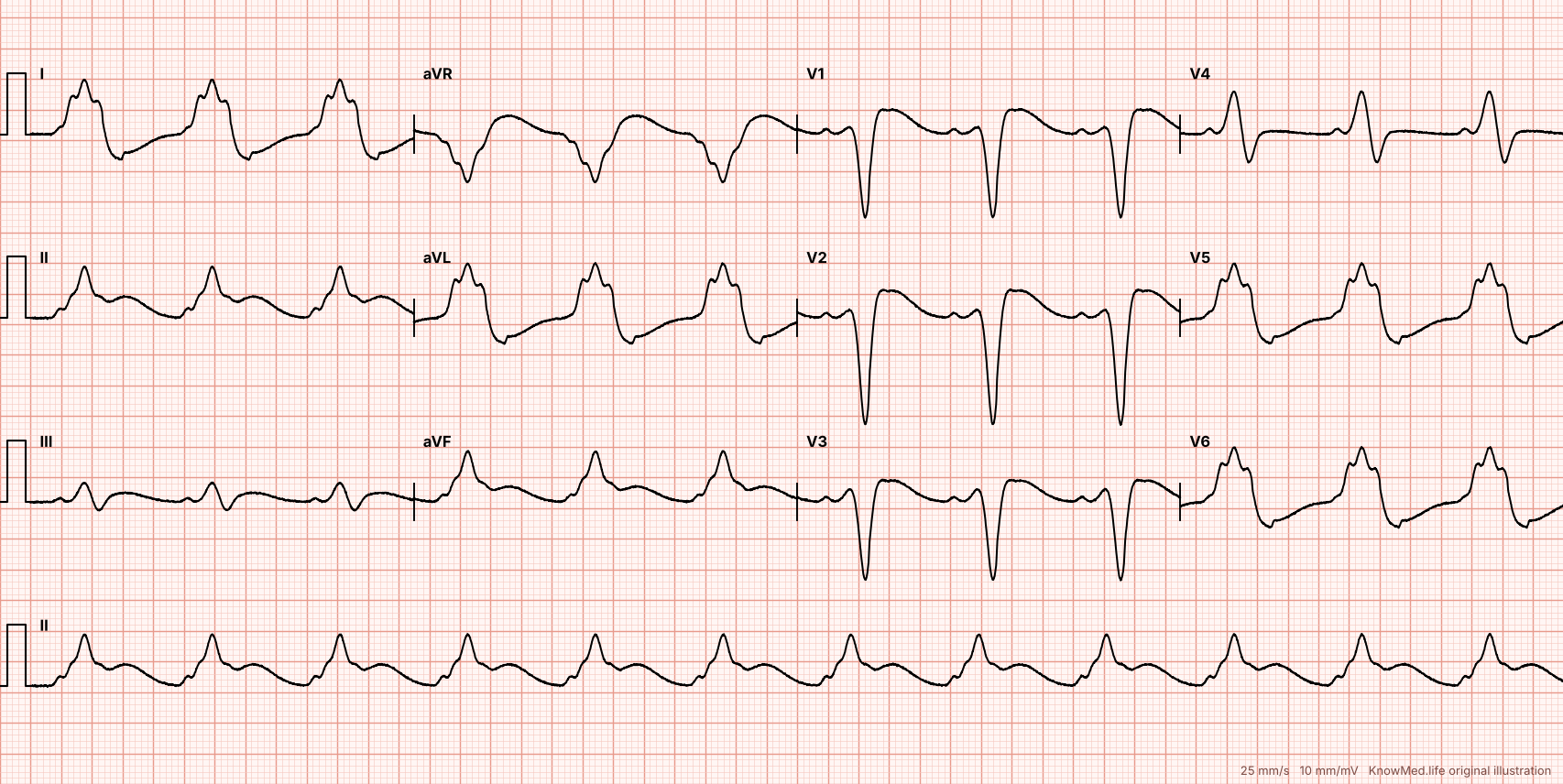
A 66-year-old woman with ischaemic cardiomyopathy has NYHA class III symptoms despite 4 months of optimal doses of sacubitril/valsartan, bisoprolol, spironolactone and dapagliflozin. Repeat echo shows LVEF 30%. She is in sinus rhythm and her ECG is shown (QRS duration 160 ms). What is the most appropriate next step?
Rationale
The ECG shows left bundle branch block: broad QRS, broad notched (M-shaped) R waves in I, aVL, V5 and V6, deep broad S waves in V1 to V3 and discordant ST-T changes. LBBB makes the left ventricle contract late and out of step, which worsens pump function. CRT uses a left ventricular lead to resynchronise both ventricles; it improves symptoms, LVEF and survival. The ESC Class I indication is symptomatic HF in sinus rhythm, LVEF 35% or less despite at least 3 months of optimal medical therapy, and LBBB with QRS of 150 ms or more. Because she also meets primary-prevention ICD criteria (ischaemic, LVEF 35% or less, NYHA III), a CRT-D is usually chosen. The trap is to add another drug when a device with proven mortality benefit is indicated.
Why the other options are wrong:
B. Ivabradine needs a resting heart rate of 70/min or more and does not correct ventricular dyssynchrony.
C. Diuretics only treat congestion and do not change prognosis.
D. Right ventricular pacing worsens dyssynchrony and can worsen HFrEF.
Where to revise: Study PDF: "Congestive Heart Failure: The Chronic HF Pathway" (KnowMed), page 12: HFpEF treatment and ICD / CRT criteria
A 62-year-old woman with RA treated with tocilizumab presents with 2 days of left iliac fossa pain. She is afebrile, pulse 104/min, with localised tenderness and guarding. Her CRP is 3 mg/L and white cell count 9.1 x 10^9/L. What is the most important point in assessing her?
Rationale
IL-6 drives the hepatic acute-phase response, so tocilizumab and sarilumab keep CRP low and can blunt fever even during severe infection. IL-6 inhibitors are also associated with lower gastrointestinal perforation, mainly in patients with diverticular disease or taking steroids or NSAIDs. A tachycardic patient with localised left iliac fossa tenderness and guarding may have perforated diverticulitis despite a normal CRP and no fever. She needs urgent surgical review and CT, and the drug should be withheld. Clinical signs, not CRP, must guide assessment in patients on IL-6 blockers. A history of diverticulitis is a relative contraindication to these drugs.
Why the other options are wrong:
A. CRP is unreliable on IL-6 blockade and cannot exclude infection.
C. RA does not cause localised peritonism; this assumption risks missing a perforation.
D. Increasing immunosuppression during possible sepsis or perforation is dangerous.
Where to revise: Study PDF: "Rheumatoid Arthritis: From Synovitis to Treat-to-Target" (KnowMed), page 11: Targeted therapy: screen before you start
A healthy 6-year-old boy arrives in Abu Dhabi with no vaccination records at all. His parents believe he had "some injections" as a baby. Which vaccine is NOT routinely needed in his catch-up plan?
Rationale
With no written record, he must be treated as unvaccinated and started on a catch-up schedule; parental recall is not accepted. Hib conjugate vaccine is not routinely recommended for healthy children aged 5 years or older because invasive Hib disease is rare after this age and most have natural immunity. Similarly, pneumococcal conjugate vaccine is not routine after the 5th birthday in healthy children. He still needs 2 doses of MMR and 2 of varicella (varicella doses 3 months apart under 13 years), and because he is under 7 he receives DTaP-based vaccine with IPV. Hib would be indicated at this age only for risk groups such as asplenia or immunodeficiency.
Why the other options are wrong:
A. MMR is needed: 2 doses at least 4 weeks apart.
B. Varicella is needed: 2 doses, 3 months apart at this age.
C. DTaP-IPV is needed: he is under 7 years, so full-strength DTaP is still used.
Where to revise: Study PDF: "Immunization Schedule: Ages, Intervals, Catch-Up" (KnowMed), page 8: Age changes the plan: Hib, PCV, rotavirus, pertussis
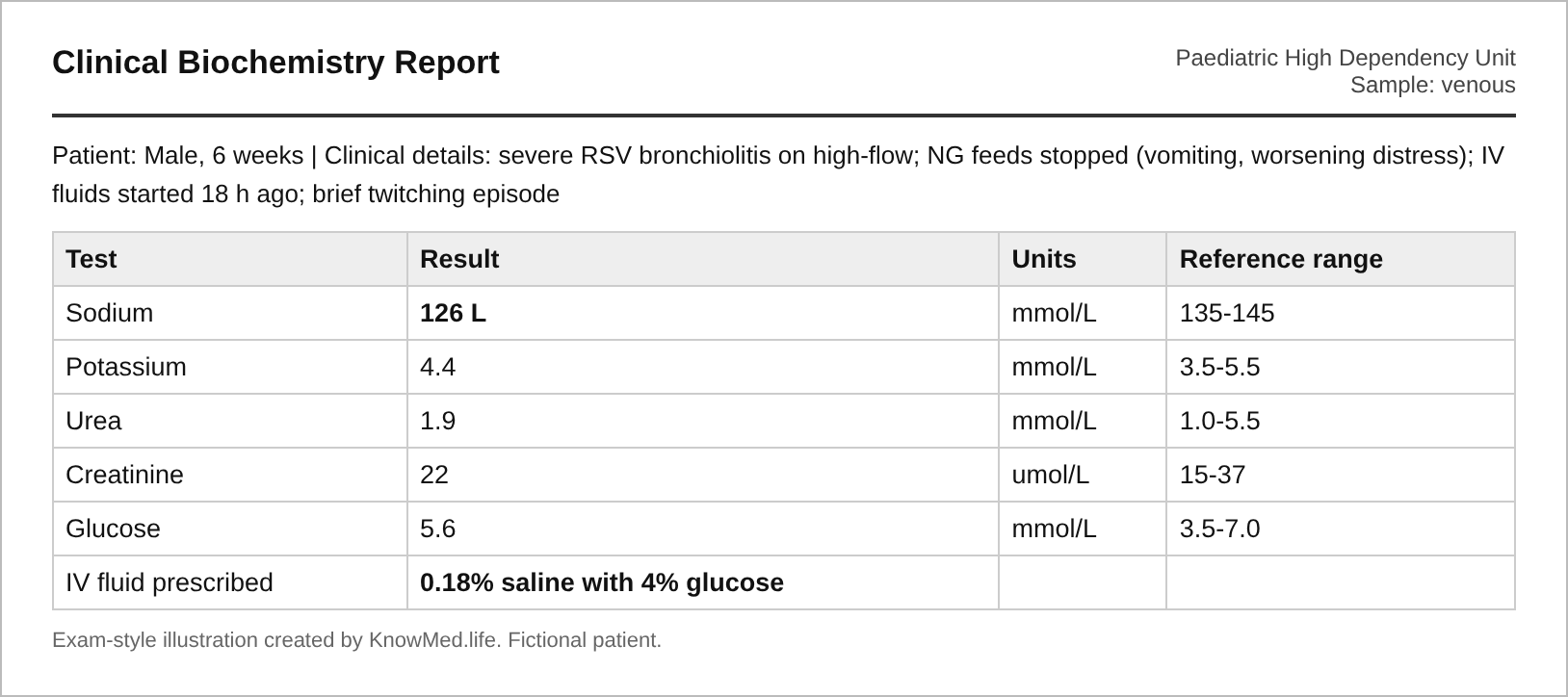
A 6-week-old boy with severe RSV bronchiolitis on high-flow oxygen has been on IV fluids for 18 hours after nasogastric feeds were stopped. The nurse reports a brief episode of twitching of his right arm. His results are shown. What is the most likely explanation and the correct action?
Rationale
The report shows a sodium of 126 mmol/L with low-normal urea in an infant receiving 0.18% saline, a hypotonic fluid. Bronchiolitis and other lower respiratory infections stimulate excess antidiuretic hormone (SIADH), so free water from hypotonic fluids is retained and dilutes the sodium. Acute hyponatraemia causes cerebral oedema, and the twitching may be a seizure, which makes this an emergency. NICE recommends isotonic IV fluids (for example 0.9% saline with 5% glucose) in bronchiolitis, often at a restricted volume, with daily electrolytes. Symptomatic hyponatraemia with seizures needs urgent senior and PICU input and may be treated with a hypertonic (2.7-3%) saline bolus under local protocol. The trap is accepting a sodium of 126 mmol/L as harmless or choosing a diuretic.
Why the other options are wrong:
A. There is no evidence of heart failure, and furosemide does not address the cause.
B. A sodium of 126 mmol/L is abnormal and dangerous in an infant, especially with possible seizures.
C. Pseudohyponatraemia occurs with severe hyperlipidaemia or paraproteinaemia, neither of which applies.
Where to revise: Study PDF: "Bronchiolitis: Wheezy Infant to Safe Discharge" (KnowMed), page 11: What actually helps; page 13: What can go wrong
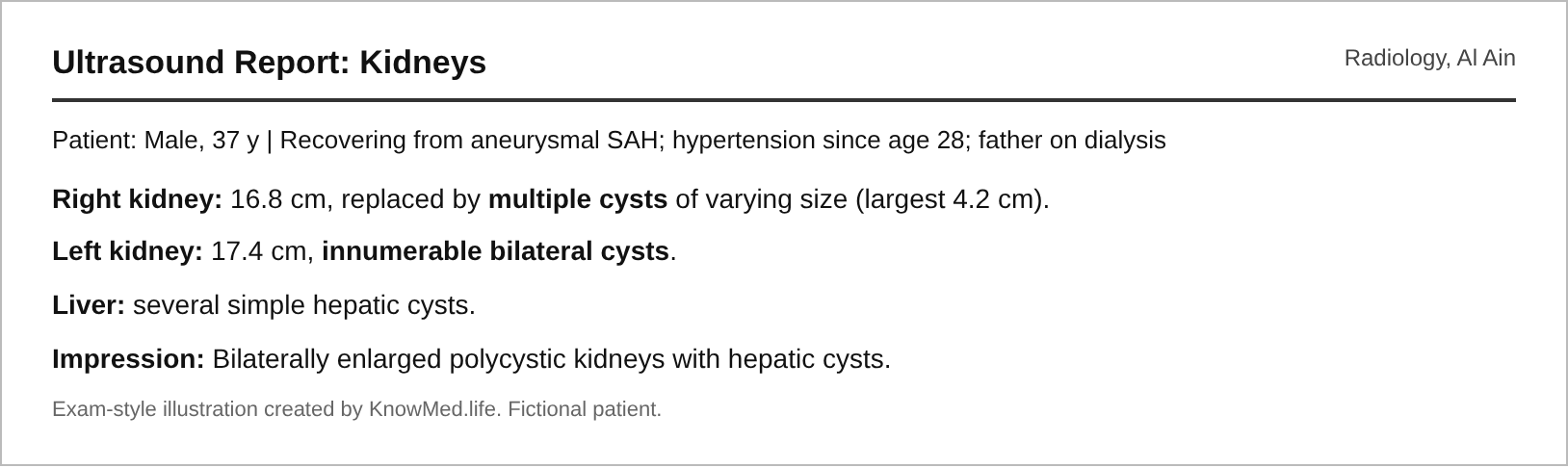
A 37-year-old man is recovering from an aneurysmal SAH. He has had hypertension since age 28 and his father is on dialysis. His ultrasound report is shown. Which inherited condition explains his aneurysm?
Rationale
The ultrasound shows bilaterally enlarged kidneys replaced by multiple cysts, together with hepatic cysts, in a young man with early hypertension and a father on dialysis: autosomal dominant polycystic kidney disease (PKD1 or PKD2). ADPKD is the classic association of intracranial berry aneurysms, which are found in roughly 1 in 10 patients and are more common with a family history of aneurysm or SAH. His first-degree relatives should be offered screening for ADPKD, and relatives with ADPKD and a family history of aneurysm may be offered aneurysm screening. Strict BP control and smoking cessation reduce the risk of aneurysm growth and rupture. Other associations are Ehlers-Danlos type IV and coarctation of the aorta.
Why the other options are wrong:
A. Marfan syndrome is linked mainly with aortic root dilatation and lens dislocation, and does not cause polycystic kidneys.
C. Tuberous sclerosis causes renal angiomyolipomas and cysts with skin and brain lesions, not hepatic cysts with this family pattern.
D. Von Hippel-Lindau causes renal cysts and carcinoma, haemangioblastomas and phaeochromocytoma, not berry aneurysms.
Where to revise: Study PDF: "Subarachnoid Haemorrhage: Thunderclap to Coil" (KnowMed), page 3: Who gets an aneurysm and who bleeds; page 15: Golden rules (rule 9)
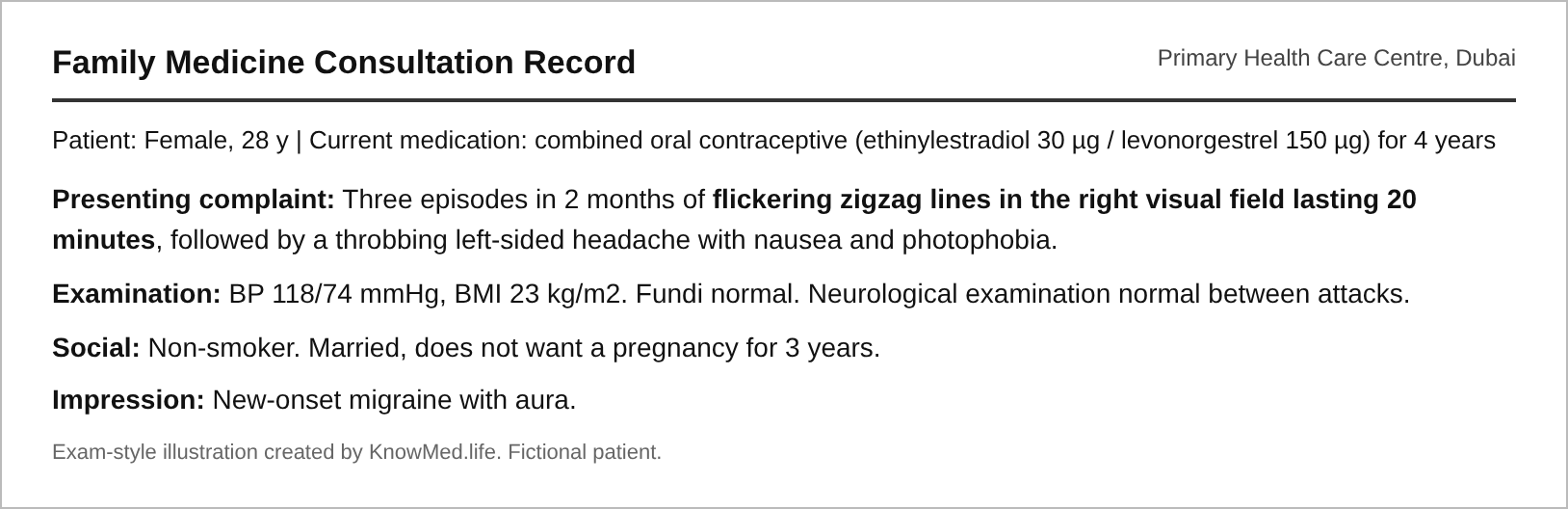
A 28-year-old woman attends a primary health care centre in Dubai. Her consultation record is shown. She wants reliable contraception for 3 more years. What is the most appropriate advice about her contraception?
Rationale
Fully reversible visual zigzag lines lasting 20 minutes before a throbbing unilateral headache are a typical visual aura, so she has migraine with aura. Migraine with aura is UKMEC 4 for all combined hormonal contraception at any age because oestrogen adds to an already increased risk of ischaemic stroke. The combined pill should be stopped straight away, with immediate switch to an effective alternative so she is not left unprotected. Progestogen-only pill, implant, injection, LNG-IUD (all UKMEC 2) and Cu-IUD (UKMEC 1) are suitable. Migraine without aura is UKMEC 2 to start a combined method but UKMEC 3 to continue it. The trap is to think a lower oestrogen dose or a non-oral route makes oestrogen safe: the patch and ring carry the same restriction.
Why the other options are wrong:
B. Continuing oestrogen with migraine with aura is an unacceptable stroke risk; triptans treat attacks but do not remove that risk.
C. Any dose of ethinylestradiol is UKMEC 4 in migraine with aura.
D. The ring is a combined method with the same restriction as the pill.
Where to revise: Study PDF: "Family Planning and Emergency Contraception: Choose, Start, Rescue" (KnowMed), page 5: Combined methods: UKMEC 4 and 3; page 7: Progestogen-only methods
A 33-year-old woman has had no periods for 8 months since a dilatation and curettage for retained products after a miscarriage complicated by infection. Her pregnancy test is negative, FSH, prolactin and TSH are normal, and she has no withdrawal bleed after a progestogen challenge or after combined oestrogen and progestogen. What is the most likely diagnosis and the investigation of choice?
Rationale
Amenorrhoea after curettage of a recently pregnant, infected uterus, with normal hormones and no bleed even after oestrogen plus progestogen, indicates an outflow tract problem: intrauterine adhesions, known as Asherman syndrome. Curettage damages the basal layer of the endometrium, and the raw surfaces scar together, especially when infection is present. Hysteroscopy is both the investigation of choice and the treatment, allowing adhesiolysis under direct vision. Asherman syndrome can also cause infertility, recurrent miscarriage and placenta accreta in later pregnancies. This complication is one reason suction (vacuum) aspiration is preferred to sharp curettage. The trap is an endocrine work-up when the failed oestrogen-progestogen challenge points to the uterus.
Why the other options are wrong:
A. Premature ovarian insufficiency causes raised FSH and a bleed after oestrogen-progestogen; her FSH is normal.
B. PCOS usually gives a withdrawal bleed after progestogen, and there is no hyperandrogenism here.
D. Sheehan syndrome follows major postpartum haemorrhage with hypopituitarism and failure of lactation, and hormone replacement would produce a bleed.
Where to revise: Study PDF: "Pregnancy Loss: Miscarriage from Bleeding to Aftercare" (KnowMed), page 11: Septic miscarriage and other complications; page 9: Expectant, medical or surgical: compared
A 70-year-old man had a craniotomy for a subdural haematoma 2 days ago and now has a confirmed proximal femoral DVT. The neurosurgeons say anticoagulation is absolutely contraindicated for at least 2 weeks. What is the most appropriate management?
Rationale
An untreated proximal DVT carries a high risk of PE, but this patient has an absolute contraindication to anticoagulation because of recent intracranial bleeding and surgery. NICE NG158 advises considering an IVC filter when anticoagulation is contraindicated, documenting a removal strategy before insertion, and removing the filter once anticoagulation becomes safe. The filter is placed in the infrarenal IVC and traps emboli travelling from the legs. Filters reduce early PE but do not reduce mortality and increase later DVT risk, which is why they are temporary and anticoagulation should start as soon as it is safe. The trap is to give thrombolysis or anticoagulation despite a fresh intracranial bleed.
Why the other options are wrong:
A. Anticoagulation is absolutely contraindicated after a recent intracranial haemorrhage and craniotomy.
B. Recent intracranial haemorrhage and surgery are absolute contraindications to thrombolysis.
C. Stockings do not treat a proximal DVT or prevent PE.
Where to revise: Study PDF: "Deep Vein Thrombosis: From Swollen Leg to Anticoagulation" (KnowMed), page 11: Filters, thrombolysis, stockings and odd-site clots
The biomarker from the previous study (sensitivity 90%, specificity 90%) is marketed to primary care clinics, where the prevalence of bacterial meningitis among patients with headache and fever is about 1%. What happens to the test's performance?
Rationale
Sensitivity, specificity and likelihood ratios are properties of the test and do not change with prevalence (provided the spectrum of patients is similar). Predictive values depend heavily on prevalence. In 10 000 primary care patients with 1% prevalence, 100 have meningitis: 90 test positive (true positives). Of the 9900 without disease, 10% (990) test positive falsely. PPV = 90 / (90 + 990) = 8.3%, so more than 9 in 10 positive results are false alarms. NPV rises towards 99.9% as prevalence falls. This is why tests validated in hospital populations often perform poorly as screening tools in low-prevalence settings, and why positive screening tests need confirmatory testing.
Why the other options are wrong:
B. Sensitivity is independent of prevalence.
C. As prevalence falls, NPV rises, not falls.
D. LR+ = 0.90 / 0.10 = 9 regardless of prevalence.
Where to revise: Study PDF: "Interpreting Medical Evidence: From Abstract to Answer" (KnowMed), page 10: Why a good test can still mislead
An 81-year-old man with known heart failure with reduced ejection fraction presents with 2 weeks of worsening orthopnoea and ankle swelling. He has no fever or chest pain. His chest X-ray shows cardiomegaly with small, symmetrical bilateral pleural effusions and upper lobe venous diversion. What is the most appropriate initial management of the effusions?
Rationale
Bilateral, roughly symmetrical effusions in a patient with decompensated heart failure and no fever or pleuritic pain are almost certainly transudates caused by raised hydrostatic pressure. Heart failure is the commonest cause of pleural effusion, and its effusions are bilateral in about 80% of cases. Guidelines (MSD Manual, BTS) advise treating the heart failure with diuretics first and tapping only if the effusion is unilateral, atypical (fever, pain, very unequal sizes) or persists despite about 3 days of diuresis. Most cardiac effusions resolve as the filling pressures fall. A raised serum NT-proBNP supports a cardiac cause. The trap is performing invasive procedures on classic bilateral cardiac effusions.
Why the other options are wrong:
A. Routine aspiration of symmetrical bilateral effusions in clear heart failure adds risk without changing management.
B. CT is used to investigate undiagnosed exudates, not typical cardiac transudates.
C. An indwelling pleural catheter is for recurrent symptomatic effusions, mainly malignant, that fail other treatment.
Where to revise: Study PDF: "Pleural Effusion: Tap, Test and Drain" (KnowMed), page 6: To tap or not to tap; page 3: Transudate vs exudate: the cause lists - Study PDF: "Acute Heart Failure: The Emergency Pathway" (KnowMed), page 9: Decongestion: diuretic dosing that works
A 4-year-old boy had tympanostomy tubes inserted 3 months ago. He now has painless, purulent discharge from the right ear for 2 days without fever. He is well. What is the most appropriate treatment?
Rationale
Acute otorrhoea through a tympanostomy tube in an otherwise well child is best treated with topical fluoroquinolone drops, which deliver very high local antibiotic concentrations directly into the middle ear. The AAP guidance on AOM and the AAO-HNS tube guideline recommend topical rather than oral antibiotics for uncomplicated tube otorrhoea, with gentle cleaning of discharge from the canal (aural toilet) to help the drops penetrate. Oral antibiotics are reserved for systemic illness, spreading cellulitis or failure of topical therapy. Aminoglycoside drops such as gentamicin are avoided with a non-intact drum because of the risk of cochlear and vestibular toxicity. Water precautions may help during the infection. The exam trap is reaching for oral amoxicillin as for AOM with an intact drum.
Why the other options are wrong:
A. Oral antibiotics are less effective and cause more side effects than topical drops for tube otorrhoea.
C. Aminoglycoside drops are potentially ototoxic when the middle ear is open.
D. A functioning tube does not need removal for a single episode of otorrhoea.
Where to revise: Study PDF: "Acute Otitis Media: Diagnose, Treat or Watch" (KnowMed), page 12: When to refer for grommets; page 9: Pain relief and what does not work
A 63-year-old postmenopausal woman has had 4 culture-confirmed episodes of cystitis in the past 12 months, each treated successfully. She already follows hydration and voiding advice. Examination shows atrophic vaginal mucosa. Renal ultrasound and post-void residual are normal. What is the most appropriate next step to prevent recurrence?
Rationale
She meets the definition of recurrent UTI (3 or more episodes in 12 months, or 2 or more in 6 months). In postmenopausal women, low oestrogen reduces vaginal lactobacilli and raises vaginal pH, which allows colonisation by uropathogens. NICE NG112 recommends considering vaginal oestrogen as the first step for postmenopausal women when behavioural measures are not enough, before antibiotic prophylaxis. Other non-antibiotic options include methenamine hippurate 1 g twice daily, which was non- inferior to antibiotic prophylaxis in a randomised trial. If these fail, daily antibiotic prophylaxis (trimethoprim 100 mg or nitrofurantoin 50-100 mg at night) is used and reviewed every 6 months. The trap is starting long-term fluoroquinolones or screening and treating asymptomatic bacteriuria.
Why the other options are wrong:
B. Fluoroquinolones are not used for prophylaxis because of resistance and serious adverse effects.
C. Cranberry products have limited evidence and are not the most effective step in postmenopausal women with atrophy.
D. Screening and treating asymptomatic bacteriuria in non-pregnant women is harmful and not recommended.
Where to revise: Study PDF: "Urinary Tract Infections: From Dipstick to Drug Choice" (KnowMed), page 14: Recurrent UTI: prevention ladder
A 35-year-old woman has been well for 8 months on paroxetine 20 mg after a first moderate depressive episode. She wants to stop it. What is the most appropriate advice?
Rationale
After a first episode, an antidepressant is usually continued for at least 6 months after remission; she has achieved this, so stopping is reasonable. Abrupt cessation can cause a discontinuation syndrome: dizziness, electric-shock sensations, flu-like symptoms, irritability, anxiety and insomnia, usually within days. Risk is greatest with short half-life drugs such as paroxetine and venlafaxine and lowest with fluoxetine. The dose should be tapered gradually over at least 4 weeks (MSD suggests about 25% per week; NICE allows longer, slower tapers), with monitoring for relapse. If severe symptoms occur, restart the previous dose and taper more slowly.
Why the other options are wrong:
A. Abrupt cessation of paroxetine commonly causes discontinuation symptoms, even though it is not addictive.
C. Benzodiazepines are not used routinely to cover discontinuation and carry dependence risk.
D. Lifelong treatment is reserved for recurrent or high-risk depression, not a first moderate episode.
Where to revise: Study PDF: "Major Depressive Disorder: Diagnose, Treat, Keep Safe" (KnowMed), page 11: Discontinuation and treatment-resistant depression; page 14: Prognosis, relapse prevention and referral
A 35-year-old man with HIV is taking dolutegravir with tenofovir and lamivudine and is suppressed. He is diagnosed with pulmonary tuberculosis and starts rifampicin, isoniazid, pyrazinamide and ethambutol. What change to his ART is needed?
Rationale
Rifampicin is a potent inducer of CYP3A4 and UGT1A1 and roughly halves dolutegravir concentrations. The dolutegravir dose is therefore increased to 50 mg twice daily during rifampicin therapy and for 2 weeks after it stops. Bictegravir and most boosted protease inhibitors should not be co- administered with rifampicin, while efavirenz is an alternative that needs no dose change. ART must not be interrupted, and rifampicin remains the backbone of TB treatment because rifamycin-free regimens are less effective. Interactions should always be checked (for example with the Liverpool HIV interaction checker).
Why the other options are wrong:
B. Stopping ART causes viral rebound, resistance and disease progression.
C. Standard once-daily dolutegravir gives subtherapeutic levels with rifampicin.
D. Rifampicin-based regimens are more effective; the interaction is managed by adjusting the ART dose.
Where to revise: Study PDF: "HIV: Test, Treat, Suppress, Prevent" (KnowMed), page 8: The side effects that examiners love; page 15: Golden rules for MCQs
A 31-year-old woman with Crohn disease started azathioprine 4 weeks ago. She presents with severe epigastric pain radiating to the back, vomiting and lipase 9 times the upper limit of normal. She does not drink alcohol, triglycerides and calcium are normal, and ultrasound shows no gallstones. What is the most appropriate action regarding her medication?
Rationale
Azathioprine-induced pancreatitis is a classic idiosyncratic reaction that typically appears within the first weeks of treatment (often in the first 1-2 months). With no alcohol, gallstones, hypertriglyceridaemia or hypercalcaemia, the timing makes the drug the most likely cause. Thiopurine pancreatitis is not dose-dependent, so a lower dose does not prevent recurrence. The drug should be stopped and not restarted; rechallenge usually provokes another attack. Other thiopurines, including 6- mercaptopurine, share the risk. Her Crohn disease can be managed with an alternative such as methotrexate or a biologic. The trap is assuming the pancreatitis is a Crohn complication and continuing the drug.
Why the other options are wrong:
A. The reaction is idiosyncratic, so dose reduction does not prevent recurrence.
C. 6-mercaptopurine is the active metabolite of azathioprine and carries the same risk.
D. Enzyme supplements treat exocrine insufficiency, not drug-induced acute pancreatitis.
Where to revise: Study PDF: "Acute Pancreatitis: From Lipase to Necrosis" (KnowMed), page 3: Causes: think I GET SMASHED; page 15: Special groups, red flags and prevention
An 84-year-old woman is in the last hours of life with advanced heart failure. She is unconscious and has noisy, rattling breathing that distresses her daughter. Repositioning has not helped. Which medicine is the most appropriate first choice?
Rationale
Noisy rattling breathing in a dying, unconscious patient is caused by pooled secretions in the oropharynx and upper airways that the patient can no longer clear. First-line management is repositioning and explaining to the family that it is usually not distressing to the patient. If it persists, an antimuscarinic is given: hyoscine butylbromide 20 mg SC or glycopyrronium 200 micrograms SC as needed, with a syringe driver if repeated doses are required (NICE NG31 lists respiratory secretions as one of the anticipatory symptoms). Antimuscarinics prevent new secretions but do not clear existing ones, so start early. Avoid deep suctioning, which is distressing. The exam trap is treating it as pulmonary oedema in the last hours of life.
Why the other options are wrong:
A. IV furosemide is for acute pulmonary oedema in active treatment; it is inappropriate and burdensome in the dying patient with terminal secretions.
C. Haloperidol is for nausea or delirium, and 5 mg IM is too high for an elderly dying patient.
D. Salbutamol treats bronchospasm, not upper airway secretions.
Where to revise: Study PDF: "End-of-Life Issues: Ethics, Law and UAE Practice" (KnowMed), page 12: Anticipatory prescribing: the 'just in case' drugs
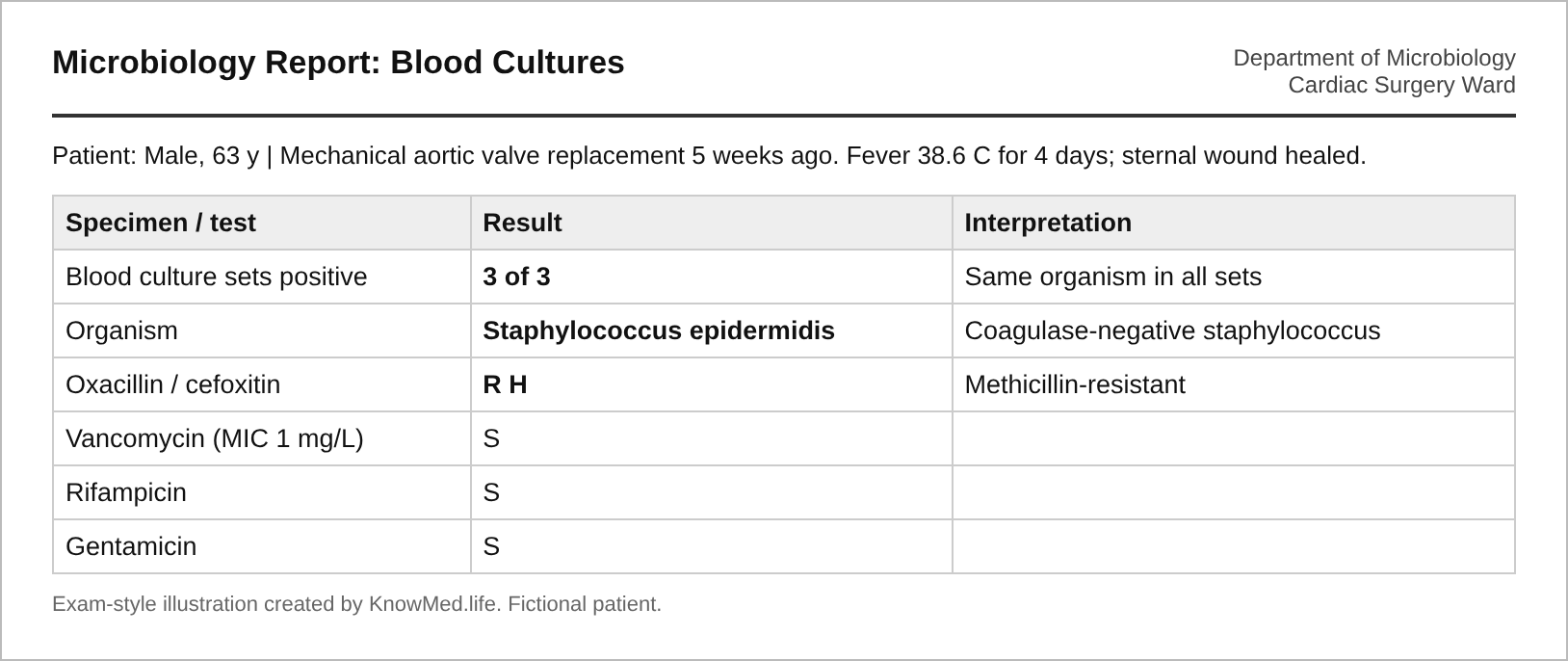
A 63-year-old man had a mechanical aortic valve replacement 5 weeks ago. He now has 4 days of fever. His blood culture report is shown. What is the most appropriate antibiotic regimen?
Rationale
The report shows methicillin-resistant Staphylococcus epidermidis (a coagulase-negative staphylococcus) in all three sets, 5 weeks after valve surgery. Under 2 months after surgery, this is early prosthetic valve endocarditis, typically caused by CoNS or S. aureus acquired around the time of surgery. Growth in 3 of 3 sets is not contamination. Staphylococcal PVE is treated with an anti-staphylococcal agent (vancomycin for methicillin resistance) plus rifampicin for at least 6 weeks, with gentamicin for the first 2 weeks. Rifampicin is used because it penetrates biofilm on prosthetic material; it should be added once bacteraemia is controlled. He needs urgent TOE and early cardiac surgical review, as many patients with early PVE need redo surgery.
Why the other options are wrong:
A. Oral short-course therapy is inadequate, and the organism is methicillin-resistant.
C. The same organism in all three sets after prosthetic surgery is true infection.
D. Ceftriaxone does not cover methicillin-resistant staphylococci.
Where to revise: Study PDF: "Infective Endocarditis: The Fever-plus-Murmur Pathway" (KnowMed), page 4: Early PVE; page 11: Staph PVE regimen; page 14: Prosthetic valve / devices
A 70-year-old man has died in the emergency department after a cardiac arrest despite 40 minutes of resuscitation. His wife has just arrived and has been taken to the relatives' room. You have confirmed her identity and asked what she knows; she says the ambulance crew told her he collapsed. Which statement is most appropriate?
Rationale
When telling relatives of a death, the doctor should give a brief narrative and then state the fact clearly using the words "died" or "dead". The MSD Manual advises that euphemisms such as "passed on" should not be used because they are easily misinterpreted, and relatives may keep hoping that the person is still alive. Expressing sorrow, then allowing silence and responding to grief, are the next steps, followed by an offer to see the body, attention to religious needs (such as rapid burial in Muslim families) and practical information. The news should be given in person, in a private room, by a clinician who knows what happened. The trap is the gentle-sounding euphemism.
Why the other options are wrong:
A. "We lost him" is a euphemism that can be misunderstood.
B. Religious euphemisms are ambiguous and may not reflect the family's beliefs.
D. Medical jargon about rhythms does not clearly tell her that he has died.
Where to revise: Study PDF: "Communication During Residency: Breaking Bad News and Beyond" (KnowMed), page 10: Telling relatives that someone has died
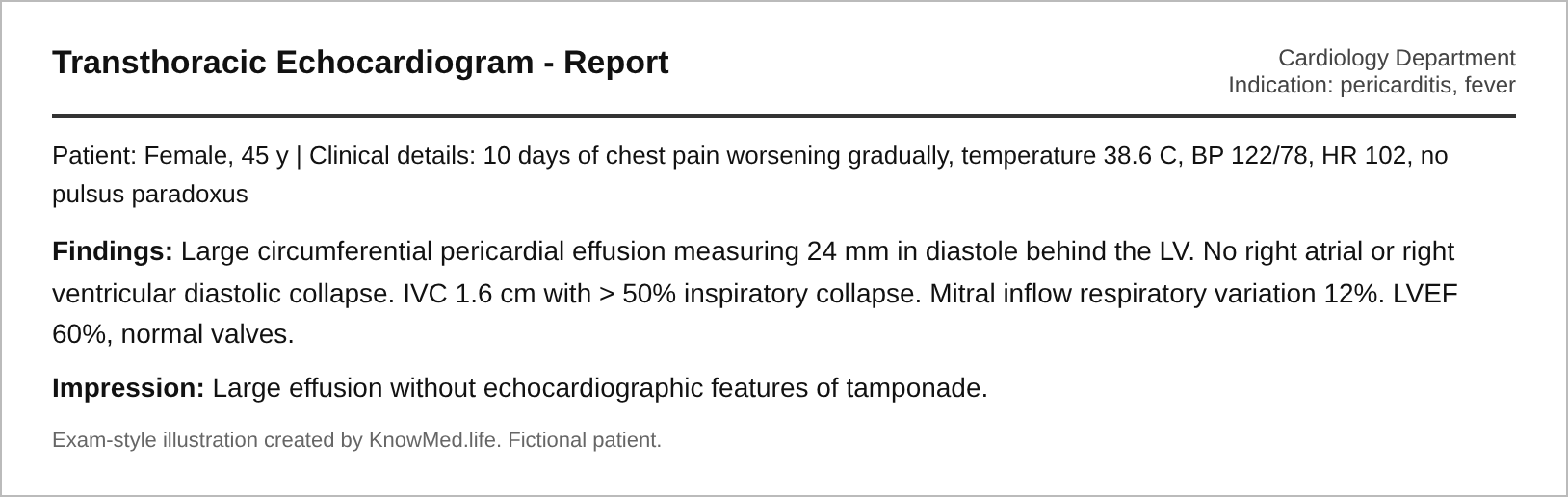
A 45-year-old woman has had 10 days of gradually worsening pleuritic chest pain. Temperature 38.6 C, BP 122/78 mmHg, HR 102/min, no pulsus paradoxus. Her echo report is shown. What is the most appropriate management?
Rationale
She has three major high-risk features: fever above 38 C, subacute onset over days, and a large effusion (24 mm, above the 20 mm threshold). Any major high-risk feature means admission and a search for a specific aetiology such as TB, bacterial infection, malignancy or autoimmune disease, because these predict complications and a non-idiopathic cause. The echo shows no chamber collapse, a normally collapsing IVC and normal inflow variation, so there is no tamponade and no need for emergency drainage. Pericardiocentesis may still be needed electively for diagnosis if a bacterial, TB or neoplastic cause is suspected or if the effusion fails to respond. Low-risk patients without any of these features can be managed as outpatients.
Why the other options are wrong:
A. Outpatient management is only for patients with no high-risk features.
B. There is no tamponade clinically or on echo, so emergency drainage is not indicated.
D. Steroids are second line, at low dose, and only after TB and bacterial infection are excluded.
Where to revise: Study PDF: "Pericarditis: The Pleuritic Chest Pain Pathway" (KnowMed), page 8: Who needs admission?; page 9: Acute pericarditis algorithm
An 8-year-old boy is brought to a family medicine clinic in Sharjah with 6 weeks of short, self-limiting nosebleeds from the right nostril, usually after nose picking. He is not bleeding now. Examination shows crusting and prominent vessels on the right anterior septum. He has a known peanut allergy with previous anaphylaxis. Growth, observations and examination are otherwise normal. What is the most appropriate treatment?
Rationale
This is the classic childhood picture of recurrent anterior epistaxis from Little's area (Kiesselbach plexus), triggered by digital trauma, with visible vessels and crusting on the anterior septum. When the child is not actively bleeding, first-line treatment is a topical antiseptic cream to reduce crusting and vestibulitis plus advice on first aid and stopping nose picking. Naseptin (chlorhexidine with neomycin, 4 times daily for 10 days) is the usual first choice, but it contains arachis (peanut) oil and is contraindicated in peanut, soya or neomycin allergy. Mupirocin nasal ointment 2-3 times daily for 5-7 days is the recommended alternative. Cautery is reserved for a visible recent bleeding point when expertise is available, and is never applied to both sides of the septum at the same session. The exam trap is prescribing Naseptin without checking for peanut allergy.
Why the other options are wrong:
A. Naseptin contains peanut (arachis) oil and is contraindicated in a child with peanut anaphylaxis.
B. Cautery of both sides of the septum in one session risks septal perforation, and cautery is not first line in a child who is not bleeding.
D. Systemic tranexamic acid is not used for simple recurrent anterior childhood epistaxis.
Where to revise: Study PDF: "Epistaxis: Pressure, Cautery, Pack, Escalate" (KnowMed), page 8: First aid, topical agents and cautery; page 12: Children, adolescents, pregnancy and the elderly
A 63-year-old man with severe depression has stopped eating and drinking for 4 days. He believes his organs are rotting and that he deserves to die. He has mild AKI. What is the treatment most likely to produce a rapid and life-saving response?
Rationale
He has severe depression with psychotic features (nihilistic delusions, a Cotard-type belief) and is refusing food and fluids, which is life-threatening. ECT is the most effective and fastest treatment for severe, psychotic or catatonic depression, for high suicide risk and when a patient is not eating or drinking; it is also safe in pregnancy. Response often appears over the first 6-12 treatments, and an antidepressant (with an antipsychotic for psychosis) is continued afterwards to prevent relapse. The main side effects are transient memory impairment and headache. If he lacks capacity to consent, treatment follows the UAE Federal Law No. 10 of 2023 on Mental Health, with psychiatric and legal oversight.
Why the other options are wrong:
A. Antidepressants take weeks to work and he may die of dehydration first.
B. Dose increases are too slow and an antidepressant alone is inadequate in psychotic depression.
D. CBT is not suitable for an acutely psychotic, physically compromised patient.
Where to revise: Study PDF: "Major Depressive Disorder: Diagnose, Treat, Keep Safe" (KnowMed), page 11: Discontinuation and treatment-resistant depression; page 7: Suicide risk and the UAE law
A 70-year-old man who takes dipyridamole and aspirin after a stroke presents with a stable regular narrow complex tachycardia at 170 bpm. Vagal manoeuvres fail. What is the most appropriate initial dose of adenosine?
Rationale
Dipyridamole blocks adenosine reuptake into cells and markedly potentiates its effect, so a standard 6 mg dose can cause prolonged asystole or high-grade AV block. Resuscitation guidance therefore recommends starting with 3 mg in patients taking dipyridamole or carbamazepine and in heart transplant recipients (denervated, hypersensitive hearts). Adenosine is given as a rapid IV push into a large proximal vein followed by a fast saline flush, with continuous ECG recording to capture the response. Patients should be warned about transient chest tightness, flushing and a feeling of impending doom. Conversely, theophylline and large amounts of caffeine antagonise adenosine, and larger doses may be required. The trap is using the standard dose without checking the drug list.
Why the other options are wrong:
B. 6 mg is the standard first dose but is too large with dipyridamole.
C. 12 mg is a second dose in standard dosing and is dangerous here.
D. 18 mg is the third dose in standard dosing and would risk prolonged asystole.
Where to revise: Study PDF: "Cardiac Arrhythmias: The Rhythm Recognition Pathway" (KnowMed), page 12: Adenosine dose tweaks; page 16: Golden rules (rule 7)
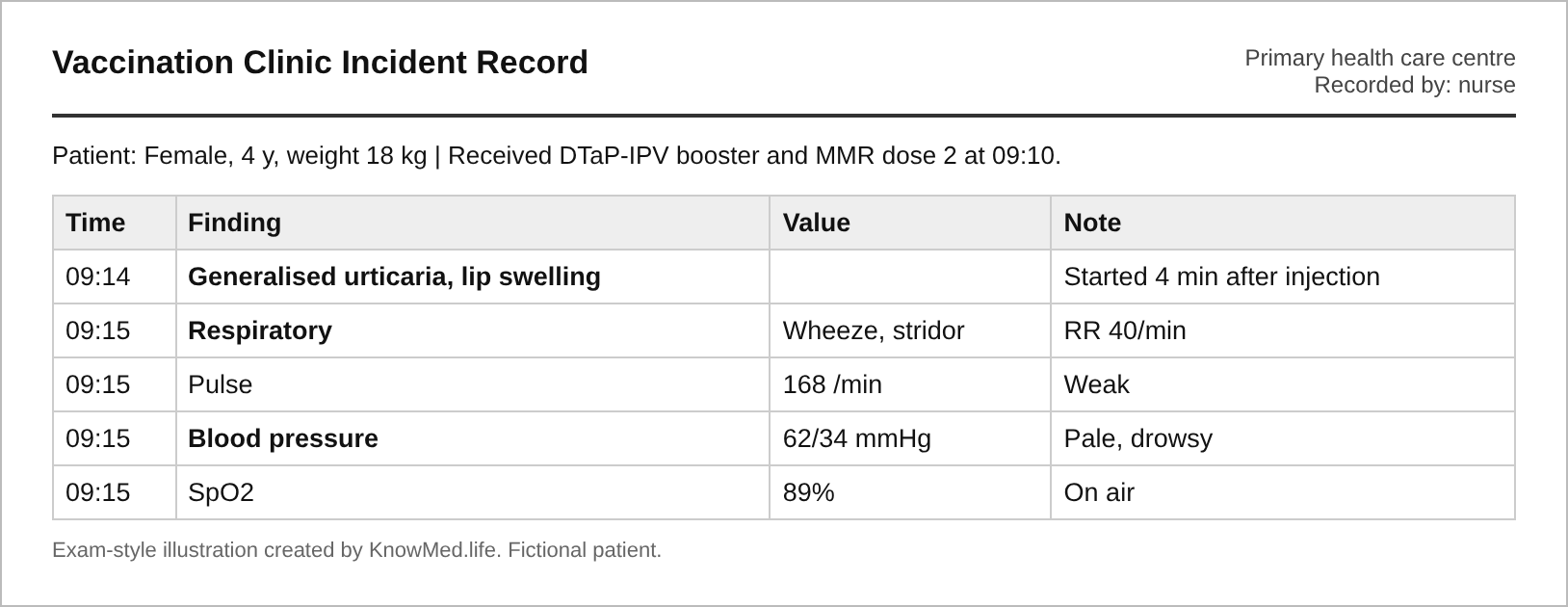
A 4-year-old girl weighing 18 kg develops symptoms in a vaccination clinic. The incident record is shown. What is the most appropriate immediate treatment?
Rationale
Within 4 minutes of vaccination she has urticaria and lip swelling, wheeze and stridor, hypoxia (SpO2 89%), tachycardia and hypotension (62/34) with drowsiness: this is anaphylaxis with airway, breathing and circulation compromise. The first and most important treatment is intramuscular adrenaline 1 mg/mL into the anterolateral thigh. Resuscitation Council UK age-based dosing for a child aged 6 months to 6 years is 150 micrograms (0.15 mL); weight-based dosing of 0.01 mg/kg (maximum 0.5 mg) gives a similar dose. Call for help (998), lay her flat (or sitting if breathing is easier), give high-flow oxygen and IV or IO fluids, and repeat adrenaline after 5 minutes if there is no improvement. Antihistamines and steroids are not first-line treatment. She must not receive further doses of the vaccine responsible without allergist review.
Why the other options are wrong:
B. Antihistamines do not treat airway obstruction or shock and delay adrenaline.
C. 1.5 mL of 1 mg/mL (1.5 mg) is a 10-fold overdose, and the subcutaneous route is absorbed less reliably.
D. Hydrocortisone acts too slowly and is no longer routinely recommended in initial anaphylaxis treatment.
Where to revise: Study PDF: "Vaccination: Schedule, Safety and Special Cases" (KnowMed), page 14: Adverse events, anaphylaxis and cold chain - Study PDF: "Anaphylaxis: Recognise, Adrenaline, Repeat" (KnowMed)